Home » Services » Commercial » Panic Bar / Closers / Electric Strike Repair / Supply and Installation
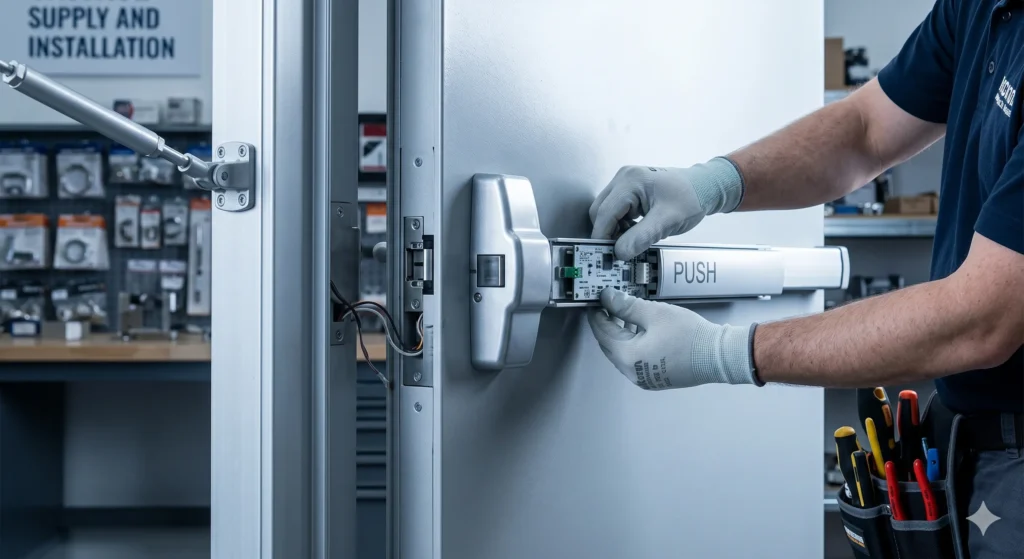
In an emergency, every second counts, and the mechanical integrity of your panic bars and exit devices is the first line of defense for occupants. These systems are designed to allow immediate, effortless egress without the need for keys or specialized knowledge, yet frequent use can lead to fatigue in internal springs and misalignment of latch mechanisms. At Mr. Door Repair, we provide expert calibration and replacement of rim, mortise, and vertical rod exit devices to ensure they function flawlessly when pressure is applied.
Compliance with the Ontario Fire Code is a legal mandate that requires all exit doors to be easily openable from the inside. Effective January 1, 2026, updated fire code regulations across Ontario have introduced stricter standardized reporting and monthly inspection requirements for locking and fastening devices in residential and commercial buildings. We help you stay ahead of these requirements by performing documented safety checks that verify your hardware releases with the legally required force, protecting you from liability and ensuring building safety.
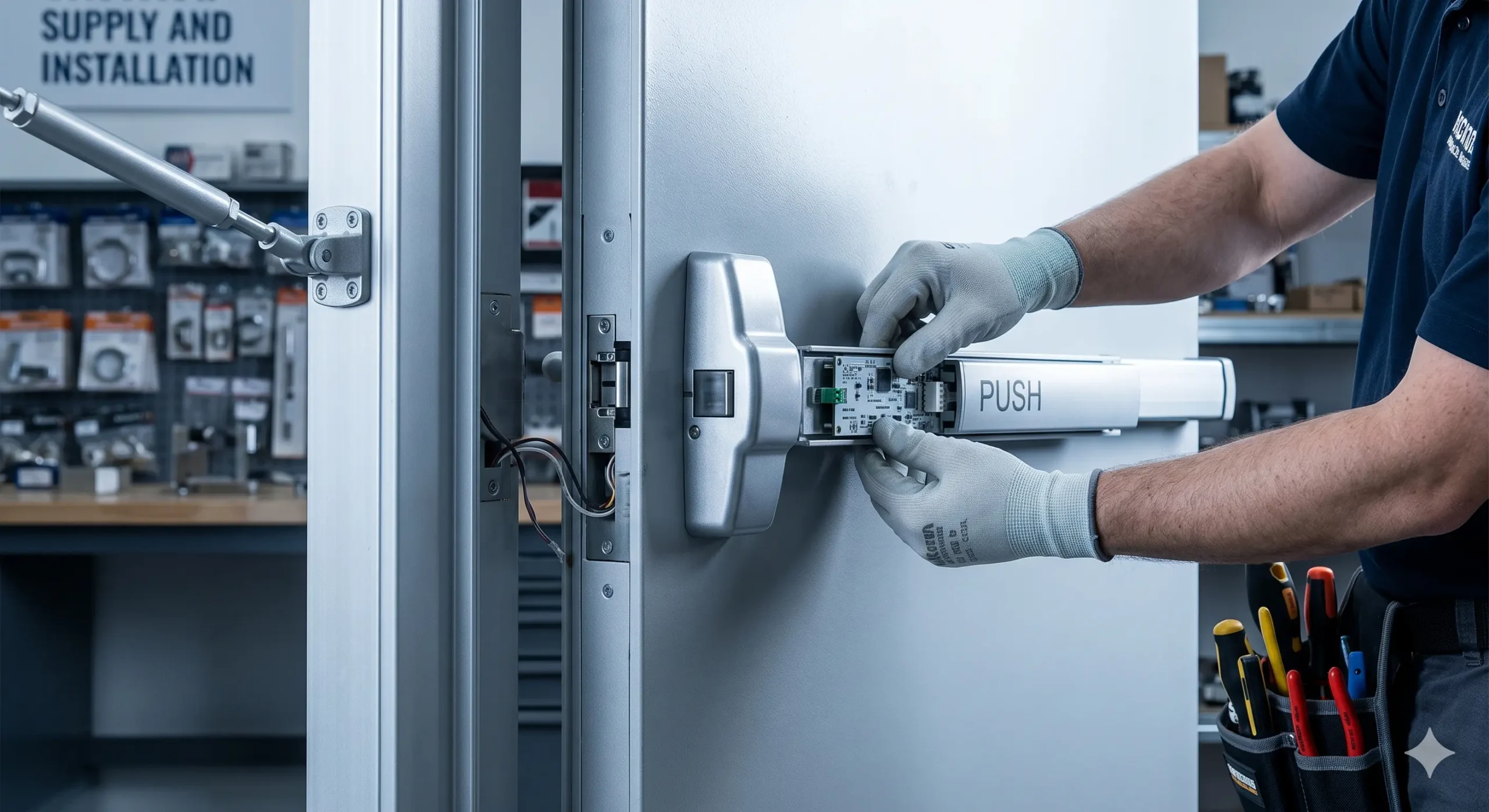
A functioning panic bar must integrate perfectly with the door’s closer and strike plate to ensure a secure latch every time it is used. Over time, the heavy-duty components of these devices can become loose or develop “dogging” issues, where the bar fails to remain retracted or engaged as intended. Our technicians are experts at diagnosing these mechanical failures and providing on-site repairs that restore the structural integrity of the exit. We ensure that every component, from the push-pad to the strike, is reinforced to handle high-traffic volume.
By addressing a sticking panic bar or a misaligned latch today, you prevent the risk of a blocked exit during a critical event. We take a technical approach to every service call, ensuring that the actuating portion of the bar covers the required width of the door as per modern safety standards. Our goal is to provide a long-term fix that ensures your emergency exits are both secure against intruders and “panic-proof” for residents. For more information on our commercial safety hardware and compliance services, visit our Services Page.
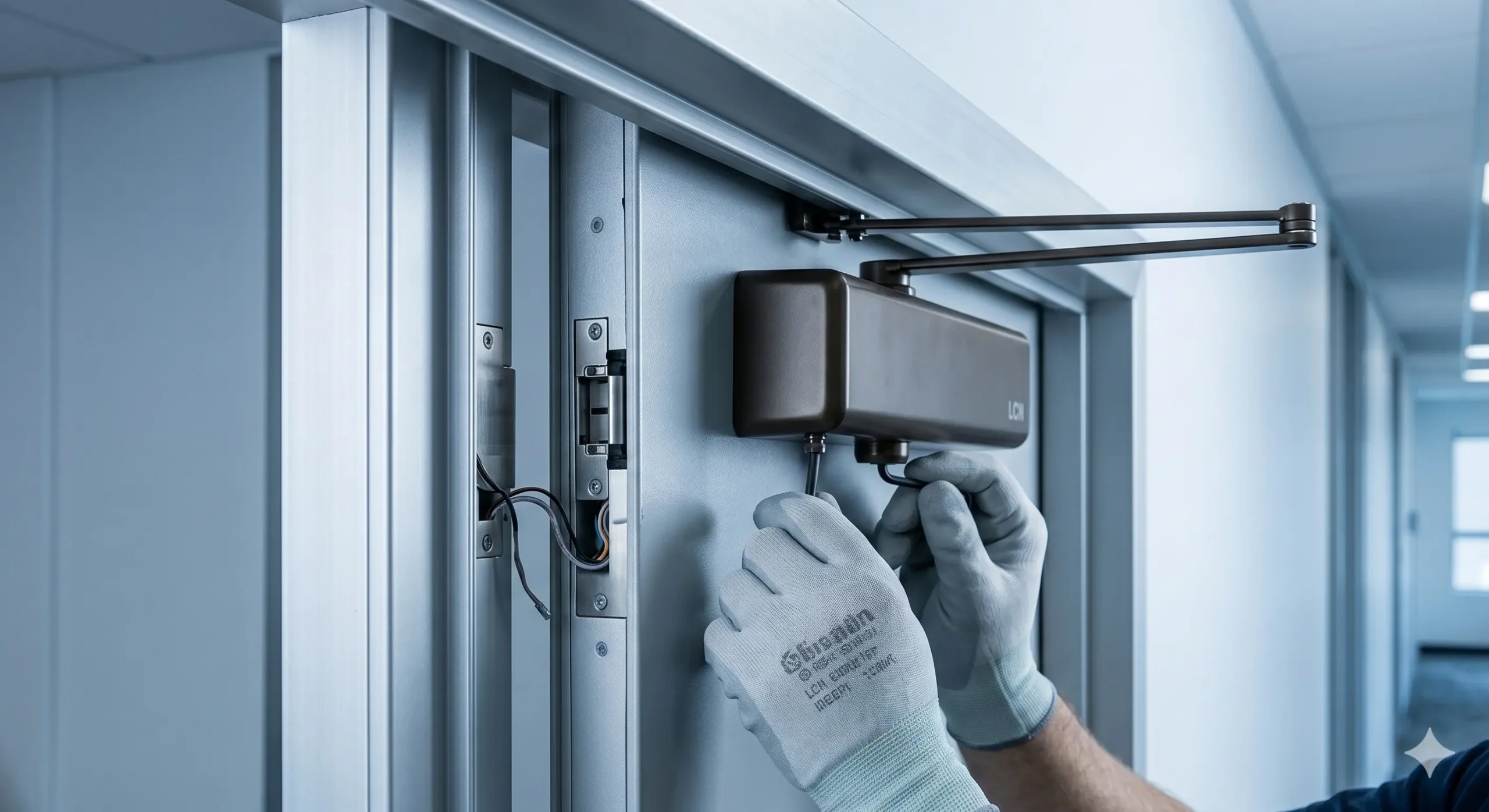
Door closers and electric strikes are the essential hardware that manage the balance between building accessibility and security. A properly adjusted hydraulic closer is vital for fire safety; it ensures that fire-rated doors return to the latched position, maintaining the fire separation between zones. According to Natural Resources Canada, well-maintained closers also significantly improve energy efficiency by preventing conditioned air from escaping through unlatched or slamming doors. We specialize in adjusting sweep and latch speeds to meet AODA standards, ensuring doors take at least five seconds to close for safe passage.
For businesses and multi-unit residential properties requiring remote entry management, we supply and install high-quality electric strikes. These devices allow for the electronic release of a door via an intercom, keypad, or card reader without compromising the structural security of the frame. Our installations are configured as either “fail-secure” or “fail-safe” to meet your specific fire code requirements, ensuring that your property remains protected even during power interruptions. We utilize reinforced strikes and precision wiring to ensure a seamless fit into existing wood or aluminum frames.
The integration of these electronic components into your security perimeter requires a deep understanding of local building codes. In 2026, the updated Ontario standards emphasize that any electronic locking device must be connected to the building’s fire alarm system for automatic release during an emergency. We ensure your electric strikes and electrified exit devices are professionally wired to meet these life-safety mandates. This dual-purpose approach ensures your facility is both convenient for authorized users and impenetrable for unauthorized guests.
Our team provides a turnkey solution, from the initial hardware selection to the final calibration of the closer’s “back-check” and “latch” valves. We handle the entire project with precision craftsmanship, ensuring that your doors operate quietly and latch securely with every cycle. We treat your property with respect, providing a clean and efficient workspace during the installation. To see how we enhance security and accessibility in Toronto’s commercial sectors, explore our Projects Page.
Tell us about your project and we’ll get back to you within the hour.
Real results from real jobs across the Greater Toronto Area.
Don’t just take our word for it — hear from homeowners and business owners across the GTA who trusted us with their doors and windows.
Call us today or request a free estimate online.
We respond within the hour for all service calls.
Can’t find what you’re looking for? Our team is happy to help — reach out anytime.
If you see oil on the closer body or dripping onto the floor, the internal seals have failed. This means the closer will no longer have “cushioning” and will likely slam. Leaking hydraulic closers cannot be reliably repaired and should be replaced immediately to prevent injury.
A “fail-safe” strike unlocks when power is lost (ideal for life safety on certain exits), while a “fail-secure” strike remains locked during a power outage (ideal for high-security perimeters). We help you choose the right configuration based on local fire codes.
Yes. Under the Accessibility for Ontarians with Disabilities Act (AODA), interior doors should require no more than 5 lbs of force to open. We can adjust the spring tension and closing speed of your hardware to meet these accessibility standards.
Yes. Because they are mechanical safety devices, they should be tested monthly. We check for loose screws, ensure the latch retracts fully, and verify that the “dogging” feature (which holds the bar open during business hours) is working correctly.
Only if the electric strike itself is fire-rated and the installation does not compromise the door frame’s integrity. Unauthorized modifications can void a fire label, so professional, code-compliant installation is a must.