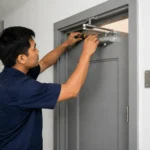
In the modern commercial landscape, the entryway of your business does more than just facilitate traffic; it serves as a critical node for security, accessibility, and data collection. As we move through 2026, the transition from traditional mechanical locks to integrated access control and automatic door systems has become a standard for businesses looking to future-proof their operations. Staying ahead of these technological shifts is no longer just about luxury; it is about maintaining a competitive, secure, and compliant workspace.
Recognizing the Need for Enhanced Security
Traditional “lock and key” systems come with inherent vulnerabilities. If an employee loses a physical key, the security of your entire facility is compromised until every lock is re-keyed. This is often the first sign that a business has outgrown its current setup.
The Problem with Physical Keys
Managing a ring of master keys is a logistical burden. When you upgrade to an access control system, utilizing keycards, mobile credentials, or biometric scanners, you gain the ability to revoke access instantly through a centralized dashboard. This “Who, Where, and When” management ensures that sensitive areas like server rooms or inventory warehouses remain restricted to authorized personnel only.
Real-Time Monitoring and Alerts
Modern systems in 2026 now feature AI-powered monitoring that can detect “tailgating” (when an unauthorized person follows an employee through a door) or alert management if a door is propped open. This level of oversight provides a proactive security posture that manual locks simply cannot offer. For deeper insights into residential and commercial security benchmarks, the U.S. Department of Homeland Security offers resources on mitigating physical security risks.
Prioritizing Accessibility and ADA Compliance
For many businesses, the move toward automatic doors is driven by the need to provide inclusive access for all clients and employees. Accessibility is not just a best practice; it is often a legal requirement.
Meeting Design Standards
Automatic sliding or swinging doors are the gold standard for meeting ADA (Americans with Disabilities Act) requirements. These systems eliminate the need for patrons to exert force or use complex hand movements to enter. If your business experiences high traffic from elderly customers, parents with strollers, or individuals with mobility aids, an automatic door system significantly enhances the user experience.
Touchless Technology in 2026
Since the global shift toward hygiene-conscious environments, touchless entry has transitioned from a trend to an expectation. Sensor-based automatic doors prevent the spread of germs on high-touch surfaces like handles and push-plates, making your facility a safer environment for everyone.
Boosting Energy Efficiency and Operational Flow
A frequently overlooked benefit of automatic doors is their impact on the building’s thermal envelope. In high-traffic environments, manual doors are often left ajar, allowing conditioned air to escape and driving up utility costs.
Automatic doors are engineered to open and close only when necessary, minimizing the exchange of air between the interior and exterior. When integrated with smart building management systems, these doors can even adjust their opening speeds based on pedestrian traffic patterns to optimize climate control. For technical guidance on improving commercial energy footprints, business owners can consult the Office of Energy Efficiency & Renewable Energy.
Signs Your Business Is Ready for an Upgrade
If you are unsure whether now is the right time to invest in these systems, consider the following indicators:
- High Employee Turnover: If you are constantly spending money on new keys and locksmith services, a digital access system will pay for itself within a few years.
- Expansion to Multiple Sites: Managing access across different locations is nearly impossible with physical keys. Cloud-based access control allows you to manage every door in your portfolio from a single smartphone app.
- Increased Liability Concerns: If your business handles sensitive data or high-value inventory, the audit trails provided by access control (knowing exactly who entered which room at what time) are essential for insurance and compliance.
- Customer Feedback: If clients have mentioned difficulty entering your building or if your entryway feels “dated,” a modern automatic system can instantly refresh your brand image.
The Role of Professional Integration
Upgrading to these advanced systems is not a simple “plug-and-play” task. It requires a strategic assessment of your building’s wiring, traffic flow, and security needs. Professional installers ensure that your automatic doors are calibrated for safety, preventing accidental contact with pedestrians, and that your access control software is encrypted against cyber threats. In 2026, cybersecurity for network-connected door systems is just as important as the physical strength of the door itself.
Future-Proof Your Entryway with Mr. Door Repair
The transition to a smarter, more accessible business environment starts at your front door. At Mr. Door Repair, we specialize in bridge-building between traditional door hardware and the latest in commercial automation and security technology. Whether you need to install high-speed automatic sliding doors for a retail space or a sophisticated biometric access system for a corporate office, our team provides the technical expertise and ongoing support your business requires. We focus on seamless integration that improves your daily operations without compromising on safety. Explore our commercial services or reach out to our consultants today to learn how we can help you upgrade your facility for the modern era.