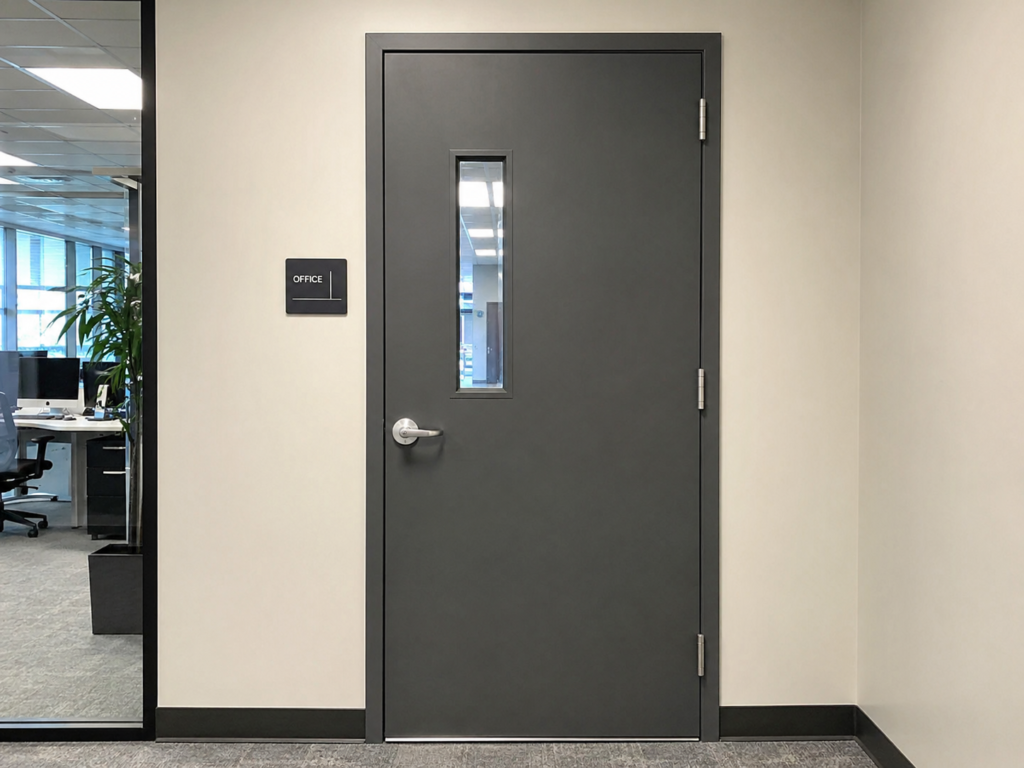
Most commercial steel doors installed across the Greater Toronto Area (GTA) are hollow metal doors, while many products sold as “solid steel” are actually hollow metal doors built with high-density insulated or stiffened cores.
Understanding the structural differences between hollow metal vs solid steel doors helps property managers, facility administrators, and business owners choose the right commercial door for security, fire resistance, and longevity.
Key Takeaways
- Hollow Metal is the Commercial Standard: Built from steel face sheets bonded over an engineered core (foam, honeycomb, or steel stiffeners), hollow metal doors provide optimal strength without excessive weight.
- “Solid Steel” is Often Misunderstood: True solid-plate steel doors are heavy and rare outside vaults or detention facilities. Most commercial “solid” doors are insulated hollow metal units.
- Security Beyond the Slab: Overall security depends more on heavy-duty hinges, strike plate reinforcement, frame anchoring, and quality locks than on whether the door slab is hollow or solid.
- Fire Safety Compliance: Fire-rated doors are certified as complete assemblies (door, frame, and hardware). Modifying a labelled fire door on-site can void its rating.
- Salt & Winter Protection: In Ontario, specifying galvanized or galvannealed steel faces prevents bottom-edge corrosion caused by winter road salt and moisture.
What Does “Hollow Metal” Really Mean?
Despite the name, a hollow metal door is rarely empty. It consists of two sheet-metal faces bonded or welded around an internal core and edge channels, mounted within a steel frame.
| Core Type | Internal Construction | Best Application | Key Benefit |
|---|---|---|---|
| Honeycomb | Resin-treated corrugated paper cells | Interior offices, corridors | Lightweight, cost-effective |
| Polystyrene / Polyurethane | Rigid foam insulation slab | Exterior building entrances | High thermal insulation (R-value) |
| Steel-Stiffened | Vertical steel channels welded to faces | High-traffic, heavy-use service exits | Maximum impact resistance |
| Mineral Core | High-density mineral fiber core | Fire-rated & temperature-rise openings | Slows heat transfer during fires |
Clarifying “Solid Steel” Doors
In commercial construction, “solid steel” generally refers to one of two designs:
- True Solid-Plate Doors: Constructed from thick solid steel slabs or laminated steel plates. Because of their extreme weight, they require heavy-duty pivot hinges and structural steel framing, typically reserved for bank vaults, military facilities, and detention centers.
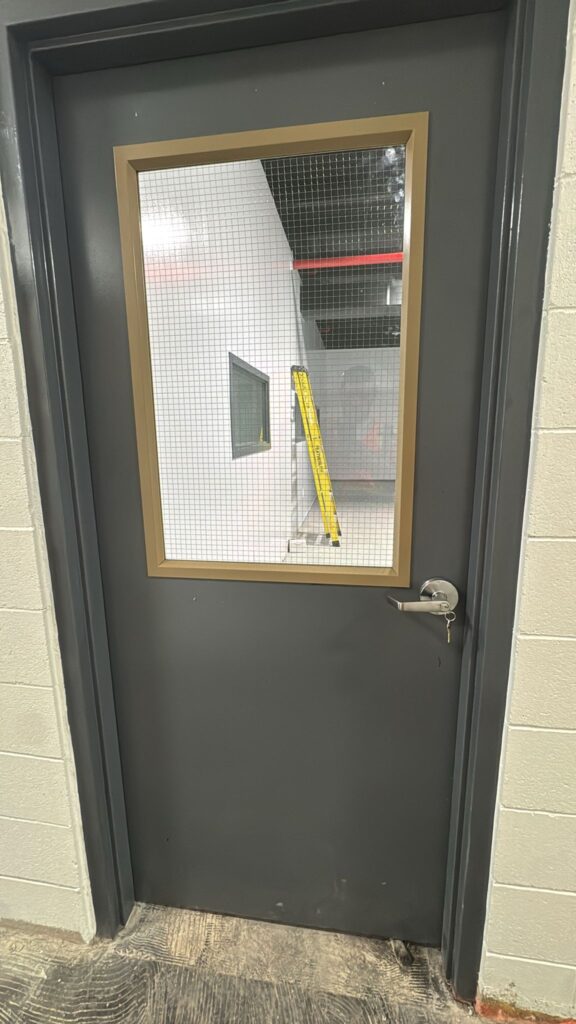
- Heavy-Duty Stiffened Hollow Metal: Steel-stiffened or high-density polyurethane-filled doors that feel completely solid when struck. This is what most commercial suppliers refer to as “solid steel.”
When evaluating commercial door quotes, always confirm the interior core type, gauge of steel faces, and hardware reinforcement specs.
Weight, Security, and Hardware Considerations
Hollow metal doors strike an ideal balance between physical security and operational weight. Excessively heavy door slabs place continuous strain on hinges, closer arms, and frame anchors, which can lead to frame sagging over time.
Maximizing Door Security
A door is only as secure as its surrounding frame and locking hardware. Potential intruders typically target the latch, hinges, or frame anchoring rather than attempting to penetrate the steel face itself.
To maximize entry protection:
- Install heavy-duty strike plates and long framing fasteners.
- Use latch guards to cover frame gaps.
- Ensure automatic door closers maintain positive latching.
You can explore our specialized panic bar, door closer, and electric strike services to upgrade your security hardware.
Fire-Rated Assemblies and Ontario Building Codes
A fire-rated door is certified as a single unit including the door slab, frame, hinges, glass lights, and latching hardware.
According to the Province of Ontario Fire Code guidelines, property owners are responsible for maintaining fire separations in commercial buildings.
Important Fire Door Rules:
- No Field Modifications: Cutting, trimming, or drilling unapproved holes in a fire-rated door can void its safety label.
- Self-Closing & Latching: Fire doors must close automatically and latch securely to prevent smoke and flame migration.
- Matching Components: The frame, hinges, and locksets must all match or exceed the required fire rating duration (e.g., 45-minute, 90-minute, or 3-hour).
Review our dedicated commercial steel door and fire-rated frame services for code-compliant installations.
Protecting Steel Doors from Ontario Winters & Road Salt
Exterior commercial doors across the GTA endure harsh winter conditions, road salt, and slush.
According to a Carleton University study on road salt corrosivity, chloride de-icers significantly accelerate steel oxidation, especially when salt-laden slush pools near the base of door frames.
Corrosion Prevention Checklist:
- Specify Galvannealed Steel: Choose hot-dip galvanized or galvannealed steel for exterior doors exposed to weather and salt.
- Maintain Bottom Sweeps: Keep bottom sweeps intact to stop salty moisture from wicking into the door core.
- Prompt Touch-Ups: Inspect paint coatings seasonally and touch up scratches or chips with anti-corrosive primer immediately.
If you suspect internal frame rust or structural alignment issues, check out our general commercial door repair options for expert maintenance. For a seasonal inspection routine, see our guide to preventive door maintenance for businesses.
Frequently Asked Questions
Is a hollow metal door weaker than a solid steel door?
Not necessarily. A steel-stiffened or high-density foam-core hollow metal door resists impact and forced entry exceptionally well while reducing strain on hinges and frames.
Can I drill or cut a fire-rated steel door to install new hardware?
No. Field modifications that are not specifically permitted by the testing laboratory listing can void the door’s fire rating. Always consult a qualified technician before modifying fire-rated assemblies.
How can I tell if my commercial steel door is fire-rated?
Look for a permanent metal certification label attached to the hinge edge of both the door slab and the frame. The label will display the rating duration and testing agency logo.
What is the best steel door for an exterior commercial entrance?
A galvannealed steel-stiffened or polyurethane foam-core hollow metal door with a heavy-duty steel frame provides superior weather insulation, rust resistance, and structural durability.
Professional Commercial Steel Door Services
Selecting the right commercial steel door depends on your building’s security needs, fire rating requirements, and environmental exposure. Mr. Door Repair provides professional inspection, code-compliant installation, and emergency frame repair services across Toronto and the Greater Toronto Area (GTA).
- Call for Commercial Service: (647) 674-5367
- Hours: Sunday to Friday, 8:00 AM – 8:00 PM