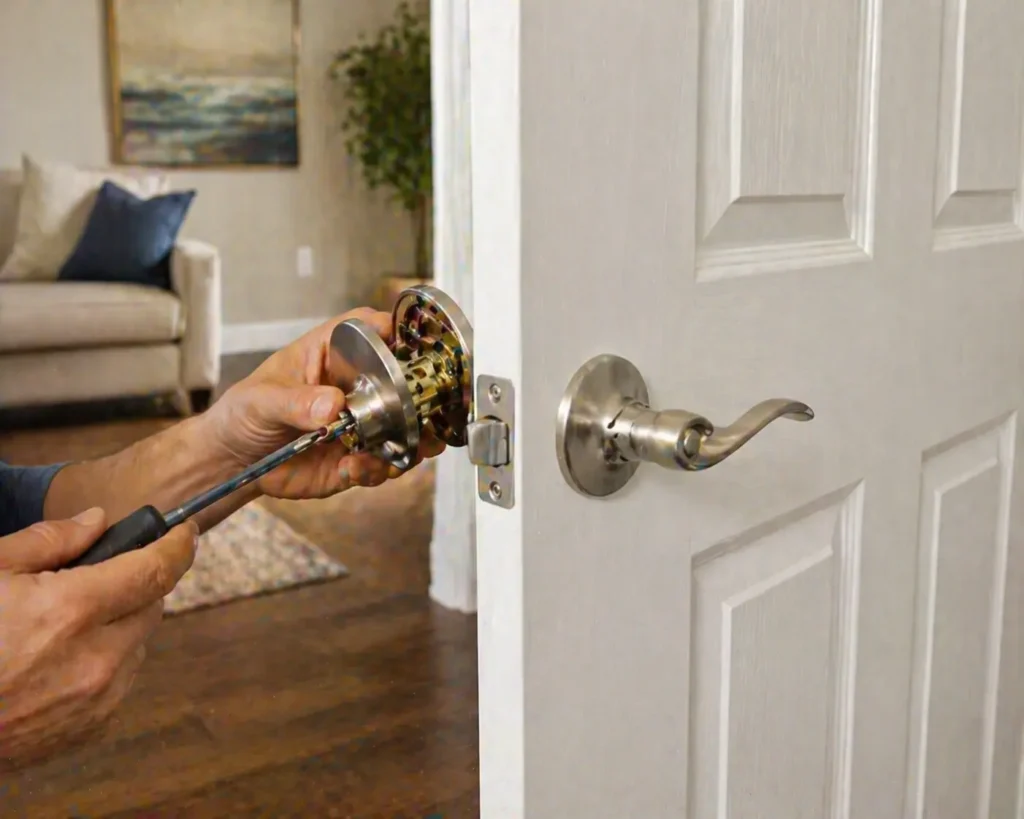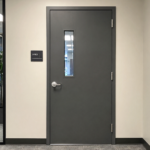
Soundproofing an interior door requires treating the entire door as a system: a heavy slab, a tight perimeter fit, and an airtight bottom seal. Installing a heavy door slab without addressing surrounding gaps will disappoint, just as adding rubber seals to a thin, hollow door yields minimal results.
Whether you want speech privacy in a home office or a quieter bedroom, this guide breaks down which noise-reduction upgrades work, how much sound attenuation to expect, and where physical limits exist.
Key Takeaways
- Gaps Leak More Sound Than Mass: Airborne noise passes through small air gaps with minimal loss. Sealing perimeter edges and undercuts provides the highest return on investment.
- Mass Blocks Sound: A solid-core door blocks significantly more sound than a hollow-core door, provided it closes tightly against the frame stops.
- Understanding STC Ratings: Sound Transmission Class (STC) laboratory ratings are best-case scenario numbers; real-world performance depends heavily on installation quality and surrounding wall construction.
- Beware Flanking Paths: Sound travels through shared vents, ceilings, and hollow walls. Upgrading a door provides privacy, but it will not make a room completely soundproof.
How Sound Penetrates Interior Doors
Noise travels through a door opening along two main pathways: direct transmission through the slab and airborne leakage around the frame. Mass controls the first pathway, while airtight sealing controls the second.
| Soundproofing Upgrade | Target Issue | Expected Improvement | Key Limitation |
|---|---|---|---|
| Perimeter Seals (Jambs/Head) | Side and top air leaks | High gain on loose doors | Requires a square, well-hung frame. |
| Door Sweep / Automatic Bottom | Undercut gap leaks | Very High (biggest leak source) | May drag on carpet or restrict HVAC airflow. |
| Threshold with Rubber Seal | Bottom gap where sweeps fail | High | Creates a slight step threshold height. |
| Solid-Core Slab Replacement | Transmission through slab | Moderate to High | Requires sturdy hinges and a reinforced jamb. |
| Tightening Latch & Stops | Frame rattles and loose fit | Low to Moderate | Adds no structural mass. |
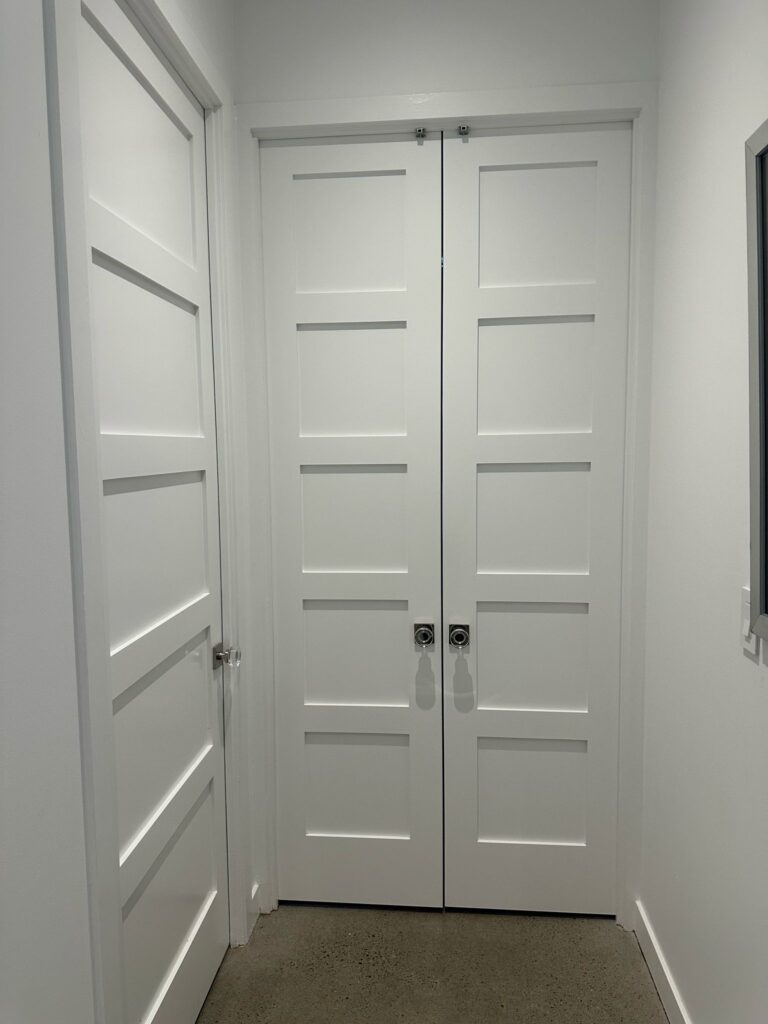
Mass vs. Gaps: What Makes the Biggest Difference?
1. Mass: Solid-Core vs. Hollow-Core Doors
Hollow-core doors feature thin wood veneer skins over a light cardboard interior grid, acting like a drum skin that vibrates when sound hits it. Solid-core slabs contain dense wood composite or solid timber cores that resist sound vibration far better.
However, solid-core doors are significantly heavier and require sturdy, properly anchored hinges to prevent sagging over time. You can explore our interior door supply and installation services to ensure your frame can support a heavy slab upgrade.
2. Gaps: Where Sound Actually Leaks
Air leaks at the bottom undercut, latch margins, and frame stops are where the majority of noise escapes.
According to Natural Resources Canada’s weatherstripping guidance, using compressible neoprene or ribbed rubber strips helps create a continuous perimeter seal. GTA humidity fluctuations cause wood frames to expand and contract, so selecting high-resilience seals ensures a tight seal year-round.
HVAC Note: Completely sealing the undercut on a bedroom door can restrict HVAC return air circulation. Have a professional assess whether a door transfer grille is required to maintain airflow.
Understanding STC Ratings and Flanking Paths
STC (Sound Transmission Class) measures an assembly’s ability to attenuate airborne sound. As noted in the National Institutes of Health acoustical door design guide, an acoustic door assembly requires a synchronized combination of frame, leaf, threshold, perimeter gasketing, and sweeps.
Why Real-World Results Fall Short of Lab Ratings
Laboratory STC tests are conducted under ideal conditions. In real residential settings, flanking transmission occurs when sound travels around the door through shared ductwork, drywall voids, drop ceilings, and subfloors. Upgrading a door can turn clear conversation into a muffled murmur, but it will not eliminate deep bass frequencies or structural impact noise.
Correcting frame alignment is essential before applying seals. If a door frame is twisted or out of plumb, seals will not compress evenly. Check out our general residential door repair options for frame alignment and adjustments. If the door also fails to latch cleanly, our guide to fixing an interior door that won’t latch covers the common causes.
A Note on Fire-Rated Doors
If your door is fire-rated (common in condos, multi-family homes, and garage entry doors), alter it with caution. Trimming a fire door slab or adding unapproved door sweeps or seals can compromise the assembly’s fire rating, and fire doors fall under the Ontario Building Code and Ontario Fire Code. Consult your property manager or local code authority before making modifications.
Frequently Asked Questions
Does a solid-core door really block more noise than a hollow-core door?
Yes, a solid-core door blocks noticeably more airborne sound (such as speech and TV noise) due to its higher mass. However, if large air gaps remain around the perimeter, sound will easily bypass the heavy slab.
Will a door sweep alone make a noticeable difference?
Yes, if your door has a large gap at the bottom. Sealing the undercut eliminates the largest single air leak in the opening.
Can I seal a door completely without causing HVAC airflow problems?
Not always. Many forced-air heating and cooling systems rely on bedroom door gaps for return air circulation. Fully sealing the door may cause airflow imbalance or stuffiness.
Should I repair my frame before adding soundproof seals?
Absolutely. Seals require uniform compression to work. If your door sags or the frame is out of square, resolve structural alignment first. You can review our door frame repair service for structural fixes.
Get Professional Door Soundproofing Support
Stop struggling with noise leaks. Mr. Door Repair provides door assessment, slab replacement, alignment, and seal installation across Toronto and the Greater Toronto Area (GTA).
- Call Us: (647) 674-5367
- Hours: Sunday to Friday, 8:00 AM – 8:00 PM