It’s late, the temperature has dropped, and your garage door won’t open. Maybe you just pulled in from a long shift and the remote isn’t doing anything. Maybe you’re standing in the driveway in your coat, tapping the wall button over and over while the door refuses to budge. If your garage happens to be the way you get into the house, this isn’t just an inconvenience, it can feel like being locked out of your own home in the dark.
The good news is that most nighttime garage door failures come down to a short list of causes, and a lot of them are things you can safely check yourself in a few minutes. The rest are signs that something mechanical has failed and the situation needs to be treated carefully rather than forced. This guide walks through what to look at first, what to leave alone, and how to tell the difference between an annoying glitch and a real safety or security issue.
Safety First: What Not to Do
Before you touch anything, it helps to remember that a garage door is one of the heaviest moving objects in most homes, and it is usually under spring tension even when the motor is off. A door that is stuck halfway or refusing to move is not a door to force, wedge, or yank on. If a cable, spring, or track has failed, the door can drop suddenly and without warning.
Do not stand or reach underneath a door that is partially open and not moving properly, even if it looks stable. Do not attempt to bypass, rewire, or ‘jump’ the opener’s electrical connections, and avoid touching the opener unit or exposed wiring if the garage is damp or you notice any burning smell, sparking, or scorch marks near the outlet or motor housing. Electrical issues around a stuck opener are best left to a qualified electrician rather than diagnosed with bare hands at night. For general guidance on recognizing electrical hazards at home, the Electrical Safety Authority is a good reference for homeowners in Ontario.
If you do decide to release the door manually using the emergency release cord, be prepared for the full weight of the door to shift once it’s disconnected from the opener, and never place your fingers near the track, rollers, or hinge points while the door is moving.
Common Reasons a Garage Door Won’t Open at Night
Garage doors tend to act up at night for a handful of recurring reasons, and cold weather makes several of them more likely. Here’s what typically causes the problem.
Power or Sensor Issues
If the opener is completely silent, dead, or unresponsive, the first suspect is power. A tripped breaker, an unplugged unit, or a blown fuse in the opener itself will stop the door cold. Separately, the photo-eye safety sensors near the bottom of the tracks can be knocked out of alignment or blocked by leaves, snow, or a stray object, which causes many openers to refuse to close or reverse an opening cycle as a safety precaution.
Remote or Battery Issues
A remote with a dying battery can behave inconsistently, working from three feet away but not from the driveway, or not at all. Wall-mounted keypads can also lose power or develop a worn contact over time. Before assuming something bigger is wrong, it’s worth trying a second remote or the manual wall button if you have one.
Cold-Weather Motor or Track Issues
Toronto winters are hard on garage door hardware. Grease in the tracks and rollers can stiffen in cold temperatures, motors can struggle to generate enough torque on frigid nights, and metal tracks can contract slightly, throwing rollers out of alignment. If your door has been sluggish all week and finally stops entirely on a particularly cold night, temperature is very likely a contributing factor.
Manual Lock Engaged
Many garage doors have a manual slide lock or a vacation lock feature that disables the opener intentionally, sometimes triggered accidentally by a bump, a curious child, or a setting that got toggled without your noticing. This is worth checking early since it’s a simple fix that requires no tools.
Broken Spring or Cable
If the door feels unusually heavy when you try to lift it manually, or you hear a loud bang earlier in the day followed by the opener struggling or failing, a broken torsion spring or frayed cable is a likely culprit. This is the scenario where forcing anything is genuinely dangerous, since the spring system stores enormous tension.
Step-by-Step Troubleshooting You Can Safely Try
Once you’ve ruled out anything that looks like a broken spring, cable, or damaged panel, there are a few checks you can work through safely before deciding whether the situation can wait until morning.
- Check the breaker and outlet: Head to your electrical panel and confirm the circuit for the garage hasn’t tripped, and check that the opener is plugged in securely.
- Inspect the photo-eye sensors: Look at the small sensor units near the bottom of each track, clear away any snow, ice, or debris, and make sure the indicator lights on both sensors are steady rather than blinking.
- Try the manual release cautiously: If you need to get a vehicle out and nothing else has worked, pull the emergency release cord slowly with both hands ready to support the door’s weight, and lift evenly rather than at one corner.
- Swap or check the remote battery: Try a spare battery or a second remote, and test the wall-mounted button as well to narrow down whether the problem is the opener or the remote.
If the door moves freely by hand once released and the opener simply isn’t engaging, that points toward an electrical or sensor problem rather than a structural one, which is generally safer to leave until daylight if you can get your vehicle out manually in the meantime.
When It’s a Security Concern, Not Just a Mechanical One
For a lot of homes in the GTA, the garage isn’t just a place to park, it’s the main route into the house, especially if the front entry is rarely used. When that door won’t open at night, the mechanical problem quickly becomes a security and access problem too. If you’re locked out of the house because the garage was your only way in, your first priority should be finding another secure way inside rather than repeatedly forcing a stuck door.
It’s also worth pausing to consider whether the failure is mechanical at all. If you notice pry marks near the door, a damaged frame, a door that was left ajar, or any sign that someone tampered with the opener or the entry door leading from the garage into the house, treat it as a possible break-in attempt rather than a routine malfunction. In that case, don’t go inside alone, and contact local police non-emergency or 911 depending on the circumstances before doing anything else. The Canada Safety Council has general home-security guidance worth reviewing once things have settled down, so you can reduce the odds of a repeat scare.
Once safety is confirmed, securing the point of entry matters just as much as getting the garage door working again. A garage that won’t close is effectively an open door to your home, and a compromised entry door or frame between the garage and the house needs to be addressed the same night if it won’t lock properly.
When to Call a Professional
Some situations genuinely can’t wait until morning. If you can see a snapped spring, a cable hanging loose, a bent track, or the door is stuck in a position where a vehicle or a person could be at risk, stop trying to operate it and call for help right away. The same goes for any burning smell, visible sparking, or exposed wiring near the opener.
On the other hand, if the door is simply unresponsive due to a dead remote battery, a tripped breaker, or a misaligned sensor, and you’re able to get your car out manually or simply leave it in the garage overnight, it’s usually reasonable to wait for daylight and normal business hours to arrange a proper repair. The exception is anything tied to home security, such as a door between the garage and the house that won’t latch or lock, which should be treated as urgent regardless of the hour.
Frequently Asked Questions
Why won’t my garage door open even though the lights and remote seem to work?
This usually points to the photo-eye safety sensors rather than the opener itself. If the sensors near the bottom of the tracks are misaligned, blocked by snow or debris, or one has a blinking rather than steady light, the opener will refuse to run a full cycle as a built-in safety measure. Clearing and realigning the sensors solves this in most cases.
Is it safe to force a garage door open manually at night?
Only if you use the emergency release cord properly and the door isn’t showing signs of a broken spring or cable. Never pry, wedge, or force a door that resists movement, since a failed spring can release enormous stored tension without warning. If the door feels unusually heavy or won’t budge evenly, stop and treat it as a mechanical failure rather than something to push through.
Why does my garage door only act up in cold weather?
Cold temperatures stiffen the grease in tracks and rollers, reduce motor torque, and can cause slight contraction in metal tracks that throws rollers out of alignment. This is extremely common during Toronto winters and often shows up as a door that opens slowly, struggles, or fails outright on the coldest nights.
What should I do if I’m locked out because the garage was my only way into the house?
First, check for any other secure entry point, such as a front or side door, before spending time troubleshooting the garage door itself. If there’s no other way in and it’s late at night, contact a locksmith or emergency door service that handles lockouts rather than forcing the garage door, since the entry door situation is usually the more urgent problem.
Could a stuck garage door mean someone tried to break in?
It’s possible, especially if you notice pry marks, a damaged frame, scratches around the lock or track, or the door was left in an unusual position. If anything looks tampered with, don’t go inside alone and contact the police before assuming it’s a routine mechanical issue.
How do I know if it’s a spring problem versus an electrical problem?
An electrical or sensor problem usually means the opener is unresponsive but the door itself moves freely by hand. A spring or cable problem means the door feels extremely heavy, uneven, or won’t move at all even manually, and sometimes follows a loud bang heard earlier in the day. Heavy or uneven resistance is the clearer sign of a spring or cable failure.
Should I call someone in the middle of the night or wait until morning?
If there’s an immediate safety risk, a visible broken spring or cable, exposed wiring, or any sign of a break-in, call for help right away. If the issue is simply a dead remote battery, tripped breaker, or misaligned sensor and you can safely leave the vehicle or find another way inside, it’s generally fine to wait for regular business hours.
Where Mr. Door Repair Fits Into a Stressful Night
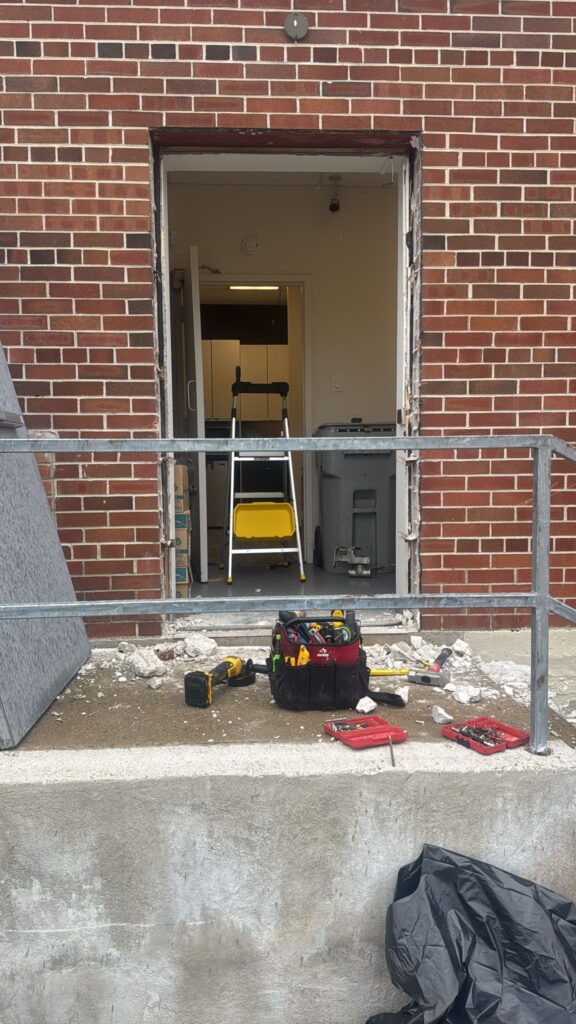
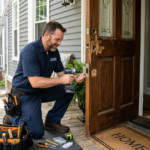
To be upfront, Mr. Door Repair does not install or repair garage doors or garage door openers, so if your overhead door itself needs a new spring, cable, or motor, you’ll want a garage door specialist for that piece. Where we can genuinely help is everything around the edges of a night like this: the entry doors, frames, and locks that make up the rest of your home’s security. If the door connecting your garage to your house won’t lock, if a frame has been damaged, if you’re dealing with a break-in or attempted break-in, or if you’re simply locked out and need a secure entry restored quickly, that’s exactly the kind of call we handle across Toronto and the GTA.
Our emergency and break-in repair service is built for after-hours calls like this, and our door frame repair team can secure a damaged or compromised frame the same night. If it’s your main entry door that’s giving you trouble rather than the garage itself, our entry door repair and general door repair services cover everything from sticking hardware to full replacements. If tonight has you locked out or worried about your home’s security, reach out to our team and we’ll get you sorted quickly and calmly.