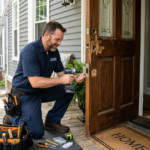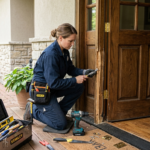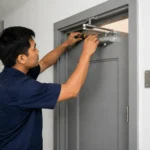
If there is one thing our technicians have learned after years of service calls across the Greater Toronto Area, it is that everyone takes their door handles and locks for granted until they get trapped outside in the freezing cold. Every single day, your front door hardware absorbs a huge amount of physical stress. You push, you pull, you turn the key with hands full of groceries, and the door itself expands and contracts with our wild weather swings.
Over time, that constant friction takes a toll on the internal mechanisms of your locks and handles. When things start to get sticky or loose, most homeowners try to ignore it. A small wiggle today usually turns into a lockout tomorrow. Here are the most common hardware issues we see in the field, what they actually mean for your home’s security, and how a professional repair addresses each one.
The Key Won’t Turn: Dealing With Seized Locks
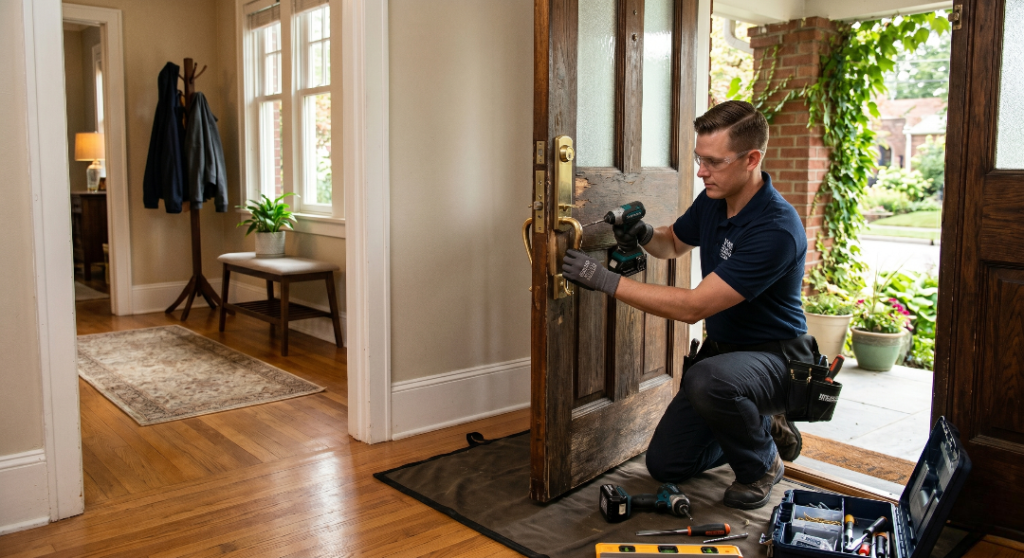
There is nothing quite as frustrating as putting your key into the deadbolt and feeling it stubbornly refuse to turn. Many people assume the lock itself is broken, but the issue is often structural. Over time, heavy wooden or fiberglass doors begin to sag slightly on their hinges. When this happens, the bolt no longer lines up with the strike plate on the frame, and you end up pulling the door toward you just to get the deadbolt to slide home.
If you force the key while the deadbolt is binding against the strike plate, you put enormous torque on the internal pins and the key itself. Eventually, something snaps. When we get called out for an entry door repair, the first thing we check is the door’s alignment. By adjusting the hinges, realigning the strike plate, and clearing debris from the cylinder, we can usually get the lock turning smoothly again without replacing the entire deadbolt.
Loose and Sagging Handles: A Mechanical Breakdown
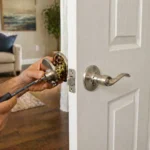
Have you ever grabbed a door lever only to have it droop downward or jiggle loosely in your hand? This is an incredibly common issue, and it usually stems from a failure inside the handle. A spindle connects the inner and outer handles, and springs provide the tension that snaps the lever back into place after you turn it.
- Backed-out set screws: The tiny screws that hold the handle to the spindle loosen over years of use. Caught early, tightening them is a simple fix.
- Fatigued or broken springs: When the internal spring fractures, the lever sags and no longer returns to level. The spring cassette or the whole handle set needs replacing.
- Failing mortise or latch mechanism: If the mechanism inside the door edge is worn, the handle may turn without fully retracting the latch.
It is always better to address a loose handle proactively before it detaches completely and leaves you unable to open the door from the inside.
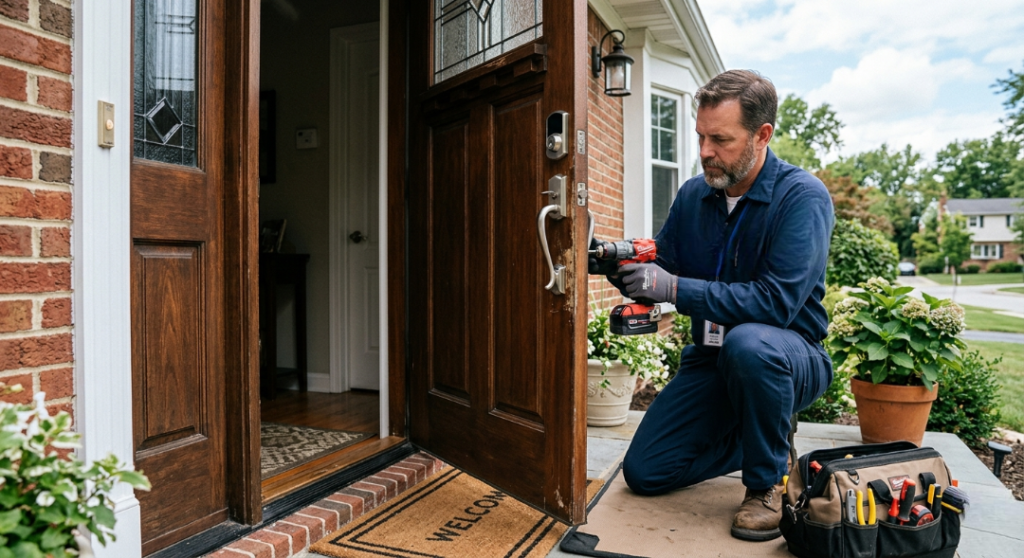
The Jammed Latch That Won’t Release
Sometimes the handle turns perfectly, but the door will not open because the latch bolt is stuck inside the door edge. This happens when the mechanism gets gummed up with dirt, rust, or degraded lubricant. We frequently see homeowners try to fix this by spraying heavy oils or WD-40 directly into the mechanism. That might provide a temporary fix, but heavy oils attract dust and grime, eventually creating a sticky paste that jams the lock even worse.
A proper general door repair involves extracting the latch, cleaning the housing, and applying a dry graphite or silicone-based lubricant that will not attract dirt. If the latch is severely rusted or bent from someone forcing the door, replacing that specific component is the safest bet to ensure the door latches securely when you leave for the day.
When Upgrading Your Hardware Is the Smart Move
We always prefer to repair and salvage existing hardware when it makes sense, but there comes a point where an upgrade is genuinely necessary for your safety. If you are dealing with locks that have been forced during a break-in attempt, or hardware that is decades old and heavily corroded, a repair is only a temporary bandage. Modern door hardware is built with anti-pick pins, reinforced strike plates, and internal components designed to withstand real force.
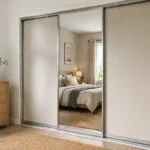
Upgrading is not just for front doors, either. Older glass patio doors often have flimsy latch mechanisms that offer very little resistance. Pairing heavy-duty hardware with our sliding patio door repair service makes sure every entry point looks good and provides genuine peace of mind. If your home has recently been broken into, our emergency break-in repair team can secure the opening and upgrade the hardware in a single visit.
Frequently Asked Questions
Why does my key turn but the deadbolt won’t extend?
The bolt is almost certainly hitting the edge of the strike plate because the door has sagged or the frame has shifted. Pull the door toward you as you turn the key: if it locks easily, the fix is alignment, not the lock.
Can I use WD-40 on a sticky door lock?
We advise against it. Petroleum-based sprays attract dust and gum up over time. Use a dry graphite or PTFE lock lubricant designed for cylinders and latches instead.
How do I tighten a loose door handle?
Look for a small set screw on the neck of the lever or knob and snug it with the correct hex key or screwdriver. If the handle still droops after tightening, the internal spring has failed and the handle set should be repaired or replaced.
Should I replace the lock after a break-in attempt?
Yes. Even if the lock still turns, the cylinder pins and bolt may be damaged, and the strike plate and frame are often weakened. A forced lock should be replaced and the frame reinforced.
Is a smart lock more secure than a standard deadbolt?
A quality smart lock is as secure as the deadbolt grade behind it. Choose a model with a Grade 1 or Grade 2 rated bolt and have it installed on a properly aligned door with a reinforced strike plate.
Let’s Secure Your Home Together
Ignoring a tricky lock or a loose handle is a gamble with your home’s security and your own convenience. You should not have to fight with your front door just to get inside after a long day. Our local team at Mr. Door Repair has spent more than fifteen years diagnosing and fixing every type of door hardware issue imaginable across Toronto and the surrounding service areas.
Whether you need a simple strike plate realignment, a new high-security deadbolt, or a full entry door overhaul, we have the parts and the expertise to get it done right the first time. Give us a call today or request a free estimate, and let’s make sure your doors are working flawlessly and keeping your family safe.