We have all been there. You walk into the bedroom or the bathroom, pull the door shut behind you, and instead of that satisfying click you hear a soft thud. You turn your back, and the door slowly swings open again. It is incredibly frustrating, especially when you just want a little privacy.
Our technicians get called out for this specific issue constantly. Homeowners often assume the handle is broken and buy a new lockset, only to install it and find the exact same problem. The truth is that a door that will not latch is rarely a handle problem. It almost always comes down to geometry. The spring-loaded latch bolt on the edge of the door is no longer lining up with the hole in the strike plate on the frame. Here is why that happens and what it actually takes to fix it.
Hinge Sag: The Slow Pull of Gravity
The most common reason an interior door stops latching is gravity. Doors are heavy, and they hang from the frame on a few metal hinges and some short screws. Over years of opening and closing, gravity pulls down on the top edge of the door. Slowly, the screws holding the top hinge start to back out of the jamb. As the top hinge pulls away from the frame even slightly, the whole door tilts downward toward the handle side.
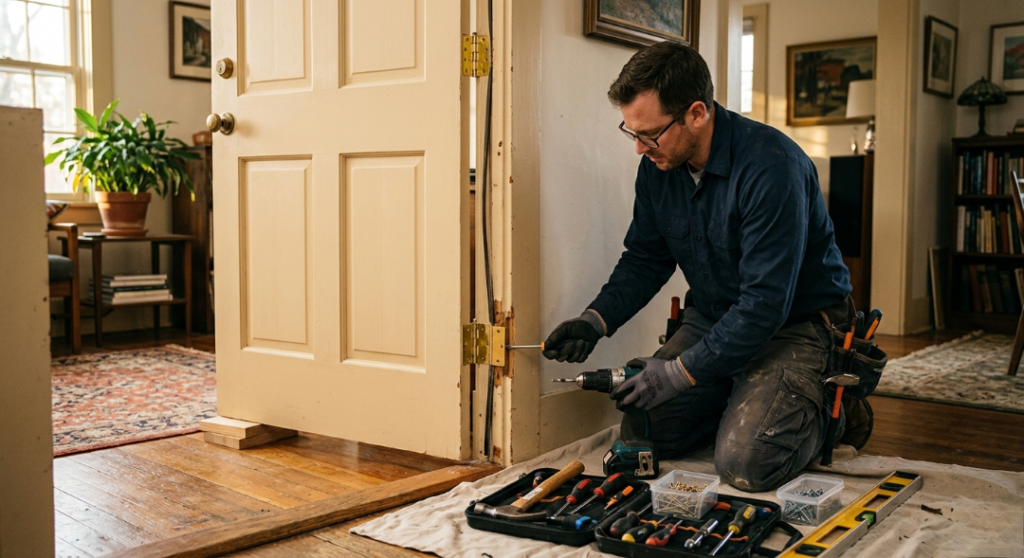
Because the door now hangs at an angle, the latch bolt drops too. It hits the metal edge of the strike plate instead of sliding cleanly into the hole. You can often see scuff marks on the plate where the latch has been striking below the opening. The fix has nothing to do with the handle. It involves pulling those short factory hinge screws and driving long, heavy-duty screws through the hinge and jamb into the wall framing to pull everything back into vertical alignment.
Strike Plate Misalignment From House Settling
Sometimes the hinges are perfectly tight, but the house itself has settled. As the foundation shifts over the years, the door frame can skew slightly out of square. When that happens, the strike plate ends up sitting too high or too low relative to the latch. Push the door closed and look at the gap between the door and the frame, and you can usually see where the misalignment is.
If the latch is only just missing the hole, a professional interior door repair solves it quickly. We remove the strike plate and use a sharp chisel to enlarge the mortise, the recessed cutout in the frame, just enough to raise or lower the plate a millimetre or two. It takes a steady hand, but realigning that plate lets the latch extend fully and hold the door without slamming.
The Lipstick Test: Finding Exactly Where the Latch Hits
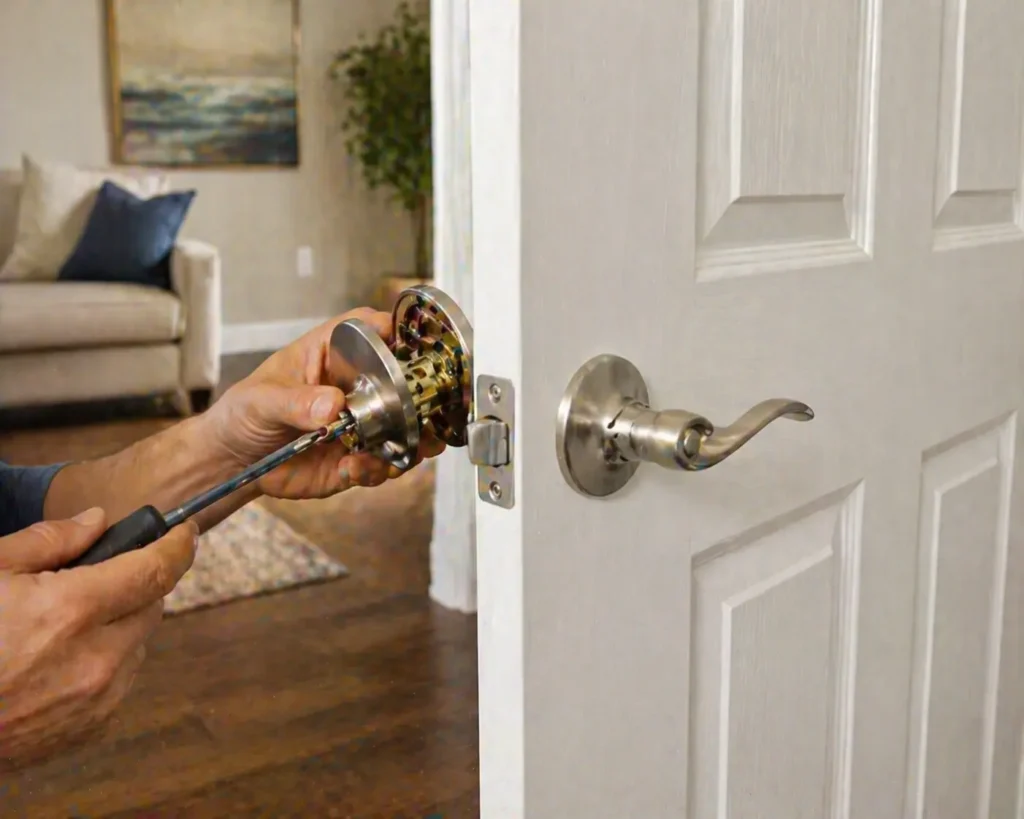
If you want to know precisely where your latch is striking, there is a simple trick we use in the trade. Dab a little lipstick or a wet dry-erase marker on the tip of the latch bolt. Close the door normally and let it hit the frame. Open it again, and you will see a clear stamp on the strike plate showing exactly where contact is being made. This takes the guesswork out of the repair.
If the mark is only slightly off, we can sometimes take a metal file and shave the inner edge of the strike plate opening to give the latch the clearance it needs. It is a subtle adjustment, but it saves carving into a painted door frame.
Seasonal Swelling and Humidity
Here in Toronto, our weather swings from freezing, dry winters to humid summers. Wooden interior doors and frames act like sponges, soaking up summer humidity. As the wood absorbs moisture, it swells.
When a door swells, it often creates what we call hinge bind. The door presses tightly against the hinge side of the frame and cannot swing shut that final fraction of an inch, so the latch never reaches the strike plate opening. If your doors only act up during the humid months, this is likely the culprit. A proper general door repair for this involves taking the door off its hinges and planing or sanding the edge so it has the clearance to swing freely year-round.
Quick Reference: Symptom to Cause
- Latch scuffs the strike plate below the hole: Hinge sag. Reinforce the top hinge with long screws.
- Latch hits above or beside the hole: Frame has settled. Move or file the strike plate.
- Door rubs the frame and won’t close in summer: Humidity swelling. Plane the door edge.
- Handle turns but latch barely moves: Worn latch mechanism. Replace the latch, not the whole handle set.
Frequently Asked Questions
Why does my door swing open on its own?
The latch is not catching in the strike plate, usually because the door has sagged on its hinges or the frame has shifted. Once the latch is realigned, the door will hold.
Will a new door handle fix a door that won’t latch?
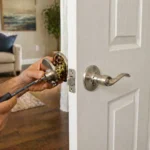
Almost never. The handle only retracts the latch. If the latch is missing the strike plate, a new handle will miss it in exactly the same spot.
Can I fix hinge sag myself?
Replacing the top hinge’s short screws with 3-inch screws driven into the stud is a reasonable DIY step. If the door is still off, the strike plate or the door edge needs professional adjustment.
Why does my door only stick in the summer?
Wood swells with humidity. The door and frame grow just enough to bind. Planing the edge gives the door permanent clearance.
How long does an interior door latch repair take?
Most hinge and strike plate adjustments take well under an hour on site. Planing a swollen door adds a little time but is still a same-visit job.
Let the Professionals Get Your Doors Clicking Shut
Living with doors that drift open or need a shoulder to close is annoying, but it is not something you have to put up with. Adjusting a single hinge screw might seem like a quick fix, but properly realigning a door, its hinges, and its strike plate takes a trained eye to make sure it does not sag again a month later.
At Mr. Door Repair, our technicians accurately diagnose why your doors are failing to latch and fix the cause, not the symptom. We secure the hinges, adjust the clearances, and make sure your doors click shut smoothly and securely every time. We help homeowners across Toronto and the GTA with interior doors, sliding closet doors, and everything in between. Contact us today to book an appointment, and let our experts get your home working perfectly again.