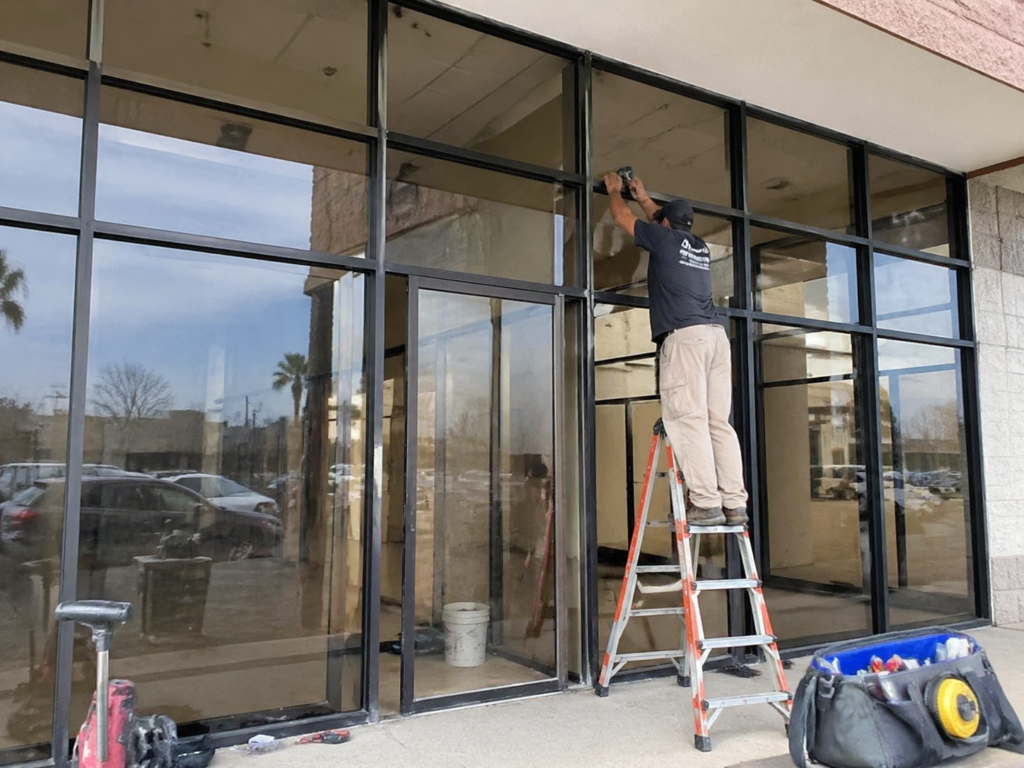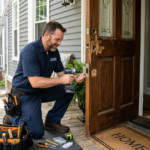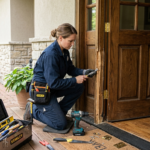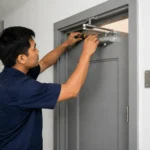
Our technicians have seen hundreds of commercial entrances across the GTA. Some were built to last decades, and others shattered or failed after a single rough season. When clients call us for a commercial glass door repair, they usually assume the frame or the hardware is the only thing that matters. But the glass you choose is doing heavy lifting every single day.
Storefront glass is not just about looking inviting to foot traffic. It is fighting wind loads, regulating your building’s HVAC efficiency, and acting as the primary security barrier against break-ins. Choosing the wrong type of glass does not just mean a higher energy bill. It can lead to safety hazards, code violations, and costly emergency replacements down the line. Here is what you need to know to make the right call for your property.
Commercial Glass Types: Tempered vs Laminated
For commercial entrances, standard annealed glass is off the table. It breaks into large, dangerous shards and will not pass safety glazing requirements. Instead, you will be choosing between two heavy hitters.
Fully Tempered Glass
This is the standard for most retail storefronts. It is heat-treated to be roughly four to five times stronger than regular glass. If someone runs a shopping cart into it, it is designed to shatter into small, blunt pebbles rather than jagged spikes. It is highly durable against blunt force and thermal stress, and it is the more economical of the two options.
Laminated Glass
Think of laminated glass as a sandwich: two plies of glass bonded together with a tough, clear PVB interlayer. If a vandal hits it with a heavy object, the glass cracks and spiderwebs, but it stays in the frame. The opening remains closed until the panel can be replaced. If security, noise reduction, or severe weather is a concern for your business, laminated is the way to go.
If you are dealing with a cracked or compromised storefront right now, prompt commercial glass replacement is critical to keep the property secure.
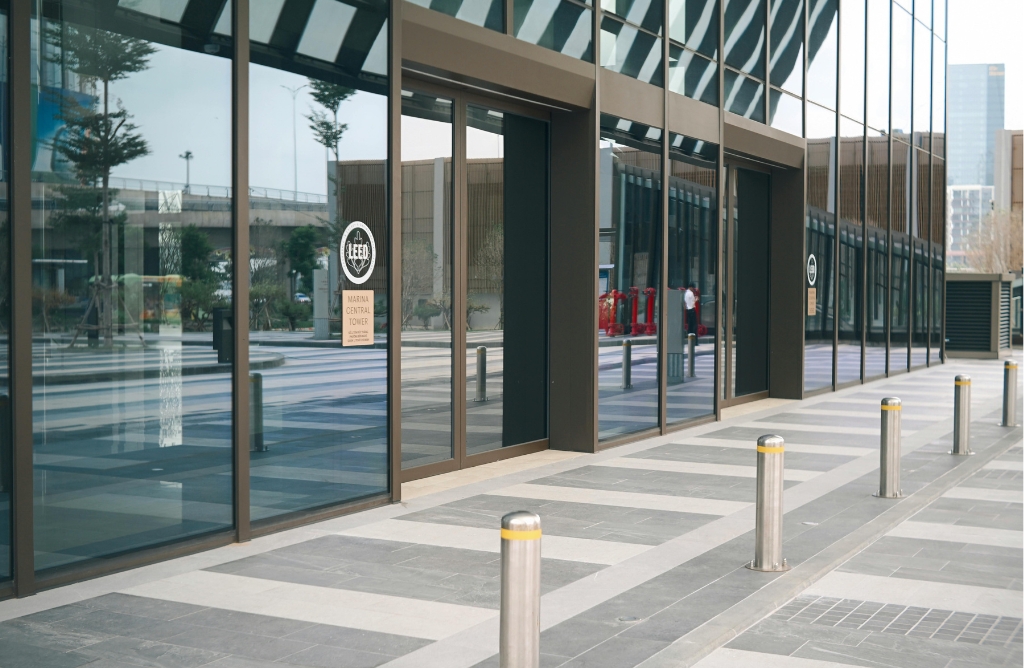
Security and Code Compliance
One of the most common mistakes we see during build-outs is failing to match the glass type to the building code and the door’s hardware requirements.
Commercial doors are not just slabs of glass. They rely on heavy-duty panic hardware, concealed closers, and heavy pulls. Because tempered glass cannot be drilled, cut, or modified after tempering, every hardware cutout must be fabricated at the factory. Measurements have to be right the first time.
Where an entrance is within a set distance of the floor or a walking surface, the Ontario Building Code mandates safety glazing. Both tempered and laminated glass meet that standard. If your business houses high-value inventory, such as a jewellery store or electronics shop, upgrading to thicker burglar-resistant laminated glass or adding security film will save you serious headaches later. Our guide to the signs your storefront glass or aluminum system needs repair covers what to watch for once the entrance is in service.
Cutting HVAC Costs With Energy-Efficient Glass
Glass is naturally a poor insulator. If your lobby faces direct afternoon sun, or if you are dealing with a Canadian winter, a single pane of standard tempered glass forces your HVAC system into overdrive.
This is where insulated glass units (IGUs) come in. An IGU consists of two or more panes separated by an argon-filled spacer. To truly maximize efficiency, look for a Low-E (low-emissivity) coating. This microscopic coating reflects infrared heat back toward its source: in summer it bounces the sun’s heat away from your lobby, and in winter it keeps your interior heat inside. Paired with aluminum framing that includes a thermal break, an insulating barrier within the frame itself, you drastically reduce thermal bridging and energy loss. Our storefront glass and aluminum systems service covers both the glazing and the frame.
Don’t Forget the Hardware: Closers, Pivots, and Weight
You can buy the most expensive, energy-efficient glass on the market, but if it is not supported properly, the door will drag, sag, and eventually fail.
Glass is heavy. A standard 3-foot-wide, 1/2-inch-thick tempered glass door weighs well over 100 pounds. Whether you use a narrow-stile aluminum frame or a frameless all-glass look, the pivots and closers must be rated for that exact weight. If you upgrade from 1/4-inch glass to a heavy double-pane IGU, your old surface-mounted closer may not have the spring power to pull the door shut against building air pressure. A door that does not latch is a security liability. Always have an expert evaluate the hinges, pivots, and closers and panic hardware when upgrading your glass.
Frequently Asked Questions
Is tempered or laminated glass better for a storefront?
Tempered is stronger against impact and more affordable, which suits most retail entrances. Laminated stays in the frame when broken, which makes it the better choice where security or forced-entry resistance is the priority.
Does commercial entrance glass have to be safety glass?
Yes. Glazing in doors and in panels near walking surfaces must be safety glazing under the building code. Both tempered and laminated glass qualify.
What is Low-E glass and is it worth it for a storefront?
Low-E glass carries a thin metallic coating that reflects heat. In an insulated unit it noticeably reduces heating and cooling costs, and it also cuts glare and UV fading on merchandise.
Can I upgrade to thicker or insulated glass in my existing frame?
Sometimes. The frame’s glazing pocket has to accept the new thickness, and the closers and pivots must be rated for the extra weight. A technician can confirm both before you order.
How quickly can broken storefront glass be replaced?
We can secure the opening right away and typically replace stock sizes quickly. Custom tempered panels with hardware cutouts need factory fabrication, so the opening is boarded and secured in the meantime.
Let’s Build an Entrance That Works
Your commercial entrance is the handshake of your business. It needs to be secure, reliable, and welcoming. Whether you are dealing with a shattered pane that needs emergency boarding, or you want to upgrade a drafty, outdated storefront to high-efficiency Low-E glass, you need technicians who understand the mechanics behind the aesthetics.
At Mr. Door Repair, we specialize in commercial glass installation, hardware calibration, and preventive maintenance for businesses across Toronto and the GTA. Browse our commercial services, or contact Mr. Door Repair today to schedule a consultation and get your entrance built right the first time.