Sliding patio doors are a seamless bridge between your indoor living space and the beauty of the outdoors. They provide expansive views and flood your home with natural light, but because they rely on a complex system of tracks, rollers, and seals, they are prone to specific mechanical issues. Over time, heavy use and exposure to the elements can cause even the highest-quality doors to stick, jam, or leak. Understanding how to identify and address these common sliding patio door problems can save you from a costly full replacement and restore the functionality of your home’s entryway.
The Most Frequent Culprit: Dirty or Obstructed Tracks
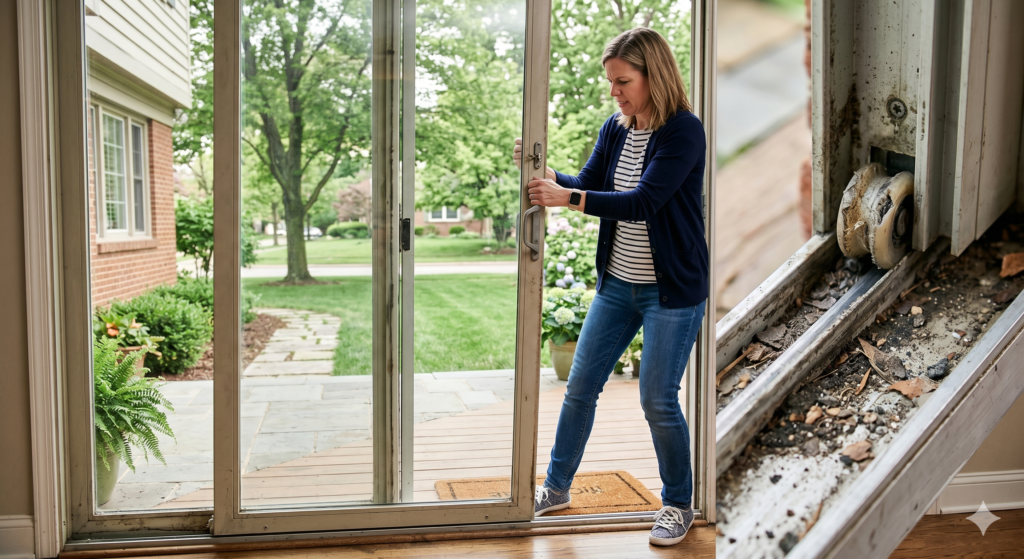
The most common reason a sliding door becomes difficult to move is the accumulation of debris within the lower track. Because the track is at floor level, it acts as a magnet for pet hair, dirt, gravel, and household dust.
When debris builds up, the rollers are forced to “climb” over the obstructions, which creates a bumpy sensation and puts undue stress on the door handle and frame. To fix this, use a vacuum with a crevice tool to remove loose dirt, then scrub the track with a stiff brush and soapy water. Avoiding heavy oil-based lubricants is essential, as these can actually attract more dirt and create a thick grime that eventually seeps into the roller bearings. For more technical maintenance standards regarding household hardware, the builders’ hardware guidelines suggest regular cleaning to prevent premature mechanical failure.
Misaligned Rollers and Height Adjustments
If your door is clean but still feels heavy or “drags” along the bottom, the rollers likely need adjustment. Sliding doors sit on adjustable wheels that can be raised or lowered using a screwdriver.
Most doors have small access holes at the bottom of the door slab (often covered by plastic plugs). By turning the adjustment screws, you can lift the door off the track to clear obstructions or lower it to square it within the frame. If the door is crooked, it will not meet the side jamb correctly, leaving gaps that allow air and insects to enter. A properly aligned door should glide with the push of a single finger.
Damaged or Corroded Rollers
In many cases, cleaning and adjusting are not enough. If you hear a grinding metal-on-metal sound, the rollers themselves may be flat-spotted or rusted. This is particularly common in humid environments or older homes. Replacing rollers requires removing the entire sliding panel from the track, which can be heavy and dangerous without a second pair of hands. Once the panel is out, the roller assemblies can be unscrewed and replaced with new units. Ensuring you have the exact match for your door model is critical, as there are hundreds of different roller designs on the market.
Failed Weatherstripping and Air Leaks
Sliding doors are notorious for energy loss if the weatherstripping is compromised. The “fin seal” or felt strips around the perimeter of the door tend to flatten or tear over years of friction.
- Identifying Leaks: On a windy day, run your hand around the edges of the closed door. If you feel cold air, the seal is broken.
- The Fix: Remove the old, brittle weatherstripping and clean the area with rubbing alcohol. Apply new high-density foam or felt stripping to ensure a tight, energy-efficient seal.
Maintaining these seals is a core recommendation of the U.S. Department of Energy to reduce HVAC strain and lower monthly utility costs.
Shattered or Foggy Glass Units
While the mechanical parts are often the issue, the glass itself can fail. Modern sliding doors use tempered safety glass. If you notice a “foggy” appearance between the two panes of glass, it means the insulated glass unit (IGU) has a broken seal. This allows moisture to enter the vacuum space, destroying the door’s thermal efficiency. Unfortunately, foggy glass cannot be “cleaned” from the inside; the entire glass insert must be replaced by a professional to restore the door’s insulating properties.
Handle and Latch Malfunctions
A sliding door that won’t lock is a major security risk. Because these doors move horizontally, even a slight shift in the house foundation can cause the latch to miss the strike plate. Often, this can be fixed by slightly adjusting the door’s height (as mentioned in the roller section) or by unscrewing the strike plate and shimmying it into a new position. If the internal spring in the handle has snapped, a full handle-set replacement is usually the most reliable solution.
Professional Solutions for a Smooth Glide
While many minor adjustments can be handled by a proactive homeowner, complex issues like track realignment, glass replacement, or seized rollers often require a professional touch. At Mr. Door Repair, we understand the frustration of a door that won’t budge. Our expert technicians are equipped to handle everything from precision roller replacements to full track restorations, ensuring your sliding patio door operates like new. Whether you need an emergency repair or a routine maintenance check, we provide the expertise needed to keep your home secure and energy-efficient. Explore our repair services or visit our contact page to book an appointment with our specialist team today.