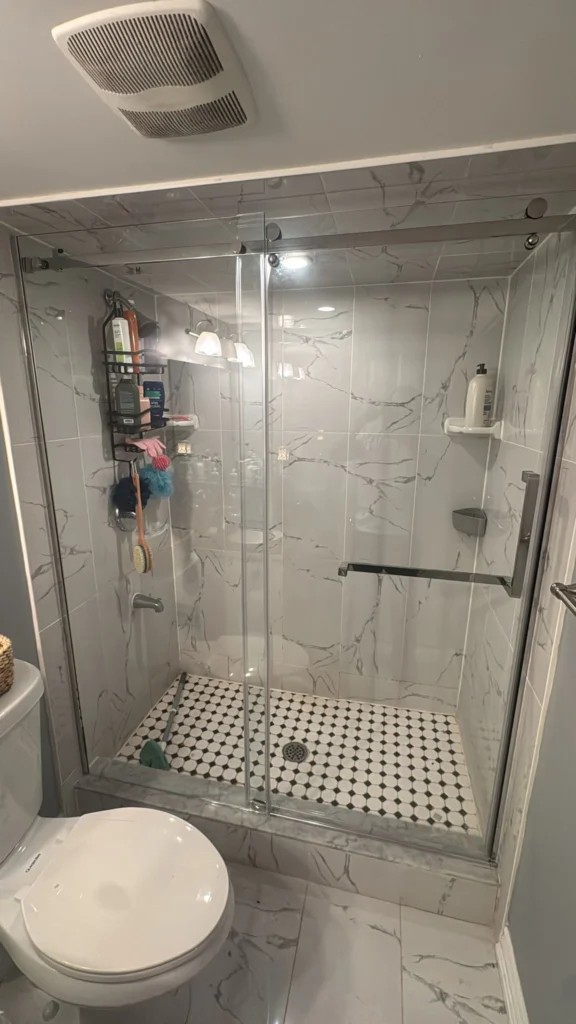
Tempered glass shower doors are designed with a specific safety goal: when the glass breaks, it crumbles into small, granular fragments rather than jagged, razor-sharp shards. That controlled breakage design, not unbreakable strength, is the core safety feature of toughened glass.
While tempered glass is significantly stronger than standard annealed glass, its edges and corners remain vulnerable, and the glass cannot be altered once tempered. This guide covers how tempered glass is made, why it breaks into small pieces, key warning signs to watch for, and when a panel must be replaced.
Key Takeaways
- Thermal Stress Pattern Creates Strength: Rapid heating and cooling locks compression into the outer surface and tension in the core, making tempered glass several times stronger than standard float glass.
- Cannot Be Cut or Drilled After Tempering: Any post-tempering modification (drilling, cutting, grinding) releases core tension and immediately shatters the panel.
- Edges and Corners are Weak Points: Heavy impacts or deep chips along glass edges disrupt the surface compression layer and can trigger a full breakdown.
- Spontaneous Breakage is Rare: Sudden panel failure is typically traced to edge chips, improper installation stress, or microscopic nickel sulfide inclusions from manufacturing.
- Chips Require Panel Replacement: Chipped or cracked tempered glass cannot be repaired or filled; hardware or seals can be serviced, but damaged glass must be replaced.
How Tempered Glass Is Made and Why It Fails Safely
Tempered shower glass begins as standard annealed float glass that is custom cut, drilled, and polished to size. The Government of Canada’s Glass Doors and Enclosures Regulations define tempered glass as glass that disintegrates into many small granular pieces when it breaks, and they require shower doors and enclosures to use safety glass.
The Tempering Process
- High-Heat Treatment: The glass panel enters a furnace and heats to roughly 620°C (1,148°F).
- Rapid Air Quenching: High-pressure air blasts cool the outer surfaces rapidly while the inner core cools more slowly.
- Internal Tension & Surface Compression: As the core cools and contracts, it pulls against the rigid outer skin, creating permanent surface compression balanced by core tension.
When the outer compression skin is punctured by a hard blow or deep scratch, the stored energy in the core releases all at once, causing the entire sheet to fracture into small, relatively blunt pieces.
Warning Signs and Inspection Guide
Because tempered glass is held together by internal stress, small edge flaws can develop into sudden failures over time.
| Warning Sign | Potential Cause | Recommended Action |
|---|---|---|
| Small chip on edge or corner | Impact during handling or glass-to-tile contact | Stop using the door; replace the glass panel immediately. |
| Visible hairline crack | Core tension layer compromised | Keep the area clear and replace the glass; it can fail with little warning. |
| Door sags or rubs against frame/tile | Loose hinges or settled wall framing | Re-align hinges and adjust hardware to remove glass stress. |
| Rattling glass at hinges/clamps | Missing rubber gaskets or loose screws | Tighten hardware and replace worn neoprene gaskets. |
| Torn or yellowed bottom sweeps | Degraded vinyl seal | Replace door sweep to prevent water leaks. |
If you notice worn hardware or alignment issues, check out our specialized shower door repair and supply services. Weighing a new enclosure? See our comparison of frameless vs framed shower doors.
What Causes “Spontaneous” Glass Breakage?
While sudden glass failure seems spontaneous, manufacturers point to several common physical triggers:
- Edge Damage and Improper Clearance: Contact between glass edges and hard materials (tile, stone, screws) creates microscopic fractures. Over time, door movement expands these fractures until the compression layer gives way.
- Installation Stress: Overtightened clamp screws, missing rubber gaskets, or forced alignment on out-of-plumb walls place continuous uneven pressure on the glass.
- Nickel Sulfide (NiS) Inclusions: Microscopic nickel sulfide particles can occasionally form during raw float glass manufacturing. These inclusions can slowly expand over time, creating internal stress that occasionally causes sudden breakage, though manufacturers describe this cause as rare. The U.S. Consumer Product Safety Commission’s tempered glass safety alert also notes that spontaneous breakage can result from scratches or installation error.
Repairing Hardware vs. Replacing Glass
Understanding what can be fixed versus what must be replaced saves money and prevents accidents:
- Hardware Services (Repairable): Worn vinyl sweeps, loose hinges, dragging tracks, discolored magnetic strips, and out-of-alignment rollers can all be repaired or replaced easily.
- Glass Panel Damage (Non-Repairable): Cracks, chips, deep gouges, or damaged mounting holes cannot be patched or filled with resin. Damaged tempered glass must be replaced entirely.
If your shower glass has sustained structural damage, learn more about our residential double-pane and custom glass replacement services.
For general frame or entryway adjustments, you can also review our general residential door repair options.
Frequently Asked Questions
Can a chipped tempered glass shower door be repaired?
No. Filing, sanding, or resin-filling a chip on a tempered glass door will not restore its structural integrity. Once the outer compression layer is chipped, the entire panel must be replaced.
Can I drill a new hole in an existing tempered glass shower door?
No. Attempting to drill, cut, or notch a tempered glass panel will cause the entire piece to instantly shatter into small granular fragments. All holes and cutouts must be made before the glass goes through the tempering furnace.
What should I do if a shower door shatters in my bathroom?
Keep pets and children out of the area immediately. Put on thick-soled shoes and heavy work gloves before cleaning. Sweep up the fragments using a broom and dustpan, and vacuum the floor and tile grouting thoroughly to catch tiny glass slivers.
Schedule a Professional Shower Glass Inspection
Don’t wait for a chipped edge or sagging hinge to turn into an emergency. Mr. Door Repair provides glass inspection, hardware adjustment, seal replacement, and custom safety glass installation across Toronto and the Greater Toronto Area (GTA).
- Call for Consultation: (647) 674-5367
- Hours: Sunday to Friday, 8:00 AM – 8:00 PM