Glass rarely fails without giving advance warning signs. Hairline cracks, persistent moisture trapped between panes, rattling glass, and localized drafts all indicate structural or thermal seal failure.
Because temperature fluctuations and long heating seasons across the Greater Toronto Area (GTA) place heavy stress on sealed glass units, recognizing early warning signs helps homeowners decide whether simple re-sealing, glass-only replacement, or full window/door replacement is required.
Key Takeaways
- Spreading Cracks Require Replacement: Cracks concentrate tension at their tips and will expand under temperature changes; they cannot be patched or filled safely.
- Trapped Fog Means Seal Failure: Condensation between double panes indicates a broken thermal seal and lost insulating value.
- Surface Fog vs. Internal Fog: Wipe both interior and exterior glass surfaces; if fog remains unreachable inside, the sealed glass unit has failed.
- Safety Code Compliance: Broken glass in entry doors, sidelights, or sliding patio doors must be replaced with marked safety glass (tempered or laminated) under the Ontario Building Code.
- Glass-Only Replacement is Cost-Effective: If the surrounding frame is structurally sound, replacing just the double-pane glass insert saves money compared to full frame replacement.
Reading the Damage: Cracks, Chips, and Scratches
| Glass Issue | Primary Cause | Severity Level | Recommended Action |
|---|---|---|---|
| Spreading Crack (Stress or Impact) | Thermal expansion or impact force | High | Replace glass panel immediately. |
| Impact Starburst | Direct blow from rock or object | High | Replace glass pane; check frame alignment. |
| Edge Chip | Handling damage or frame contact | Moderate to High | Inspect immediately; a chip can weaken the edge and lead to sudden cracks. |
| Deep Sightline Scratch | Harsh cleaning abrasive | Low to Moderate | Replace if view is distorted; cannot be buffed out of tempered glass. |
| Haze / Droplets Between Panes | Desiccant saturation & seal failure | High | Replace insulated glass unit (IGU). |
| Rattling / Shifting Glass | Degraded rubber gasket or sealant | Low | Re-seal or replace rubber glazing stops. |
Stress Cracks vs. Impact Cracks
According to architectural glass research from National Research Council Canada, thermal stress cracks typically begin at pane edges where cold frames create extreme temperature differentials relative to the pane center. Impact cracks, by contrast, radiate outward in a starburst pattern from a single point of impact.

Fog Between the Panes: Understanding Insulated Glass Unit (IGU) Failure
Double-pane windows feature two glass sheets separated by an airtight spacer filled with insulating gas (such as argon). When perimeter seals degrade, moisture enters the air cavity.
As noted in Natural Resources Canada’s guide on window condensation, fog or droplets trapped between glass panes confirm a blown perimeter seal, requiring replacement of the sealed glass unit.
The 3-Step Wipe Test
- Wipe Interior Glass: If moisture clears, it is ambient indoor condensation caused by high relative indoor humidity.
- Wipe Exterior Glass: If moisture clears, it is natural exterior dew.
- Internal Moisture: If fog remains trapped inside where you cannot wipe it, the thermal seal has failed.
Learn more about restoring clear views by visiting our double-pane glass replacement services.
Safety Requirements for Entry and Patio Door Glass
Broken glass in entryway doors, sidelights, or sliding patio doors presents immediate safety and home security risks.
Under building safety guidelines such as the City of Kitchener safety glazing bulletin, which adheres to the Ontario Building Code, safety glass (tempered or laminated) meeting CAN/CGSB 12.1 standards is required in doors and adjacent sidelights. Requirements can vary, so confirm details with your municipality’s building department.
Safety glass is designed to crumble into small, dull fragments rather than sharp shards. When replacing broken patio door glass, always ensure the replacement pane features a permanent safety etching in the corner.
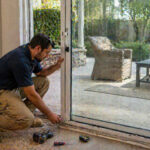
If your sliding patio door glass is cracked or binding along its track, view our sliding patio door repair options.
Glass-Only Replacement vs. Complete Frame Replacement
Homeowners often ask whether they must replace an entire window or door assembly when glass breaks:
- Choose Glass-Only Replacement when: The wooden, aluminum, or vinyl frame is straight, square, and structurally sound. This is the fastest, most economical fix for foggy double-pane units or cracked panes.
- Choose Complete Replacement when: The door or window frame exhibits wood rot, warping, or water damage, or when frame misalignment continuously cracks new glass panes.
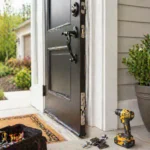
For general frame adjustments and entryway repairs, check out our general residential door repair options. If an older door is nearing replacement anyway, our guide to repairing or replacing a front door can help you decide.
Frequently Asked Questions
Can a cracked window pane be filled or repaired?
No. Unlike automotive windshields that use resin injection, residential window glass cannot be patched safely. Stress from wind pressure and thermal expansion will cause hairline cracks to spread.
Does fog between panes mean I have to replace the whole window frame?
No. In most cases, a technician can unclamp the glazing stops, remove the failed double-pane glass insert, and drop in a brand-new sealed unit while keeping your existing frame intact.
How quickly should I replace broken glass in an entry door?
Immediately. Broken entry or patio door glass leaves your property unsecured and presents an injury hazard. Cover the opening temporarily with plywood or heavy plastic until a professional installs code-compliant safety glass.
Professional Glass Replacement Services
Whether you are dealing with a foggy double-pane window, a cracked entryway sidelight, or shattered patio door glass, Mr. Door Repair provides expert assessment, code-compliant glass supply, and installation across Toronto and the Greater Toronto Area (GTA).
- Call for Consultation: (647) 674-5367
- Hours: Sunday to Friday, 8:00 AM – 8:00 PM