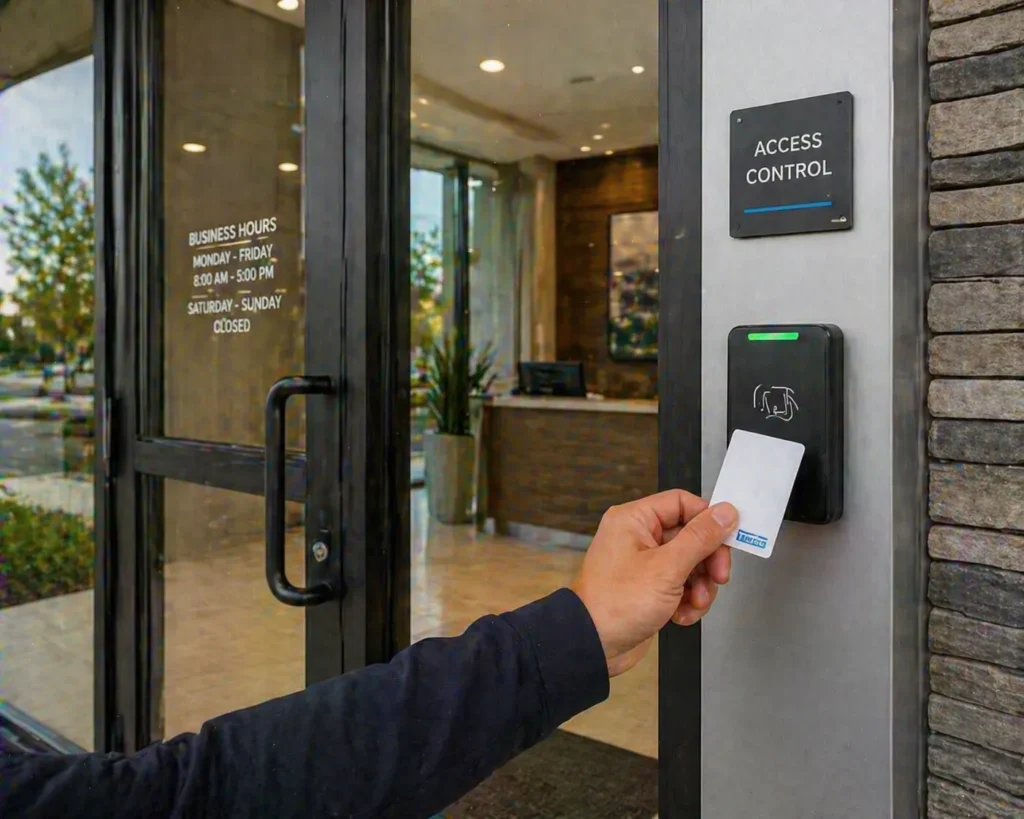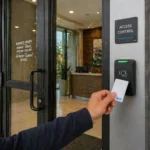
Selecting access control hardware for commercial doors often comes down to choosing between an electric strike and a magnetic lock (maglock). While both control door access electronically, they operate on completely different mechanical principles.
An electric strike keeps your existing mechanical lock or panic bar intact while electrically releasing the latch. A magnetic lock holds the door shut using continuous electromagnetic force and features no mechanical latch at all.
This guide compares electric strikes vs magnetic locks on operational modes, power outage behavior, life safety compliance, and access control integration.
Key Takeaways
- Latching Mechanics: Electric strikes replace the frame strike plate to release a latch bolt; magnetic locks use an overhead electromagnet paired with an armature plate on the door slab.
- Fail-Safe vs. Fail-Secure: Magnetic locks are strictly fail-safe (they unlock when power is cut). Electric strikes can be specified as either fail-secure (remain locked without power) or fail-safe.
- Life Safety & Egress Rules: Magnetic locks do not offer mechanical egress by default. Codes typically require release devices and a fire alarm connection so people can exit safely. The Ontario Building Code, the Ontario Fire Code and your local authority set the final rules.
- Fire-Rated Door Requirements: Fire-rated doors typically require fail-secure electric strikes or latching hardware to maintain positive latching during a building fire.
Electric Strike vs. Magnetic Lock Comparison
| Feature | Electric Strike | Magnetic Lock (Maglock) |
|---|---|---|
| Operating Mechanism | Replaces frame strike plate; movable keeper releases latch bolt | Electromagnet on frame holds steel armature plate on door |
| Fail Mode | Available in Fail-Secure or Fail-Safe models | Fail-Safe only (unlocks when power is removed) |
| Mechanical Egress | Lever handle or panic bar always opens door from inside | No mechanical egress; relies on electronic release devices |
| Power Consumption | Intermittent (draws power primarily during release) | Continuous (draws power constantly to stay locked) |
| Fire Door Suitability | Excellent (Fail-Secure models preserve fire door latching) | Restricted (Requires specialized fire alarm tie-ins) |
| Ideal Door Types | Standard hollow metal doors, wooden doors, exit doors | All-glass doors, narrow-stile aluminum doors |
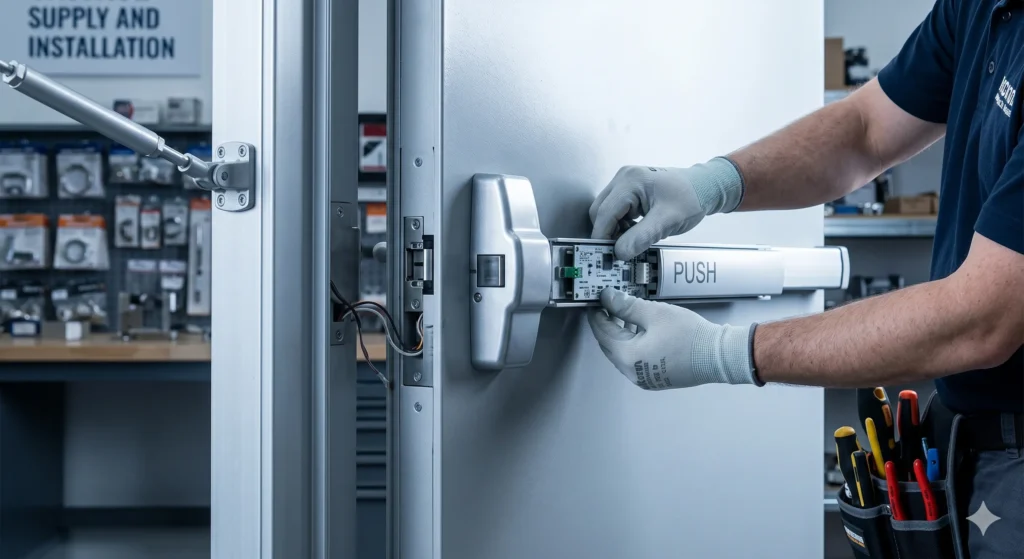
Understanding Fail-Safe vs. Fail-Secure Settings
Fail-mode settings determine what happens to a lock when electrical power is lost:
- Fail-Secure (Power-to-Unlock): The door remains locked from the outside during power outages. Mechanical handles or panic bars still allow occupants to exit freely.
- Fail-Safe (Power-to-Lock): The locking mechanism releases automatically when power drops, allowing the door to be opened from either side.
According to technical hardware guidelines from Allegion Canada on fail-safe and fail-secure mechanisms, fail-secure electric strikes are standard on fire-rated doors because they maintain positive latching without electricity, preventing fire and smoke from spreading between building zones.
For assistance with exit door hardware, explore our specialized panic bar, door closer, and electric strike services.
Egress Codes and Fire Alarm Integration
Installing a magnetic lock on an egress door requires strict compliance with local building codes. Because magnetic locks lack mechanical latches, a person exiting cannot simply turn a handle to leave. Requirements differ by building type and municipality, so confirm yours with your local building department before work begins.
One example is the Town of Caledon electromagnetic lock compliance declaration, which it ties to the Ontario Building Code. It asks the installer and owner to confirm that:
- Fire Alarm Tie-In: Automatic release whenever the building fire alarm system activates.
- Power Loss Release: The lock releases when power fails, and when a fault is detected in the circuit between the fire alarm panel and the lock controller.
- Manual Release: A manually operated switch accessible only to authorized personnel, plus release by a manual pull station within 600 mm (2 feet) of the door frame.
- Manual Reset: The lock can only be reset manually after it has released.
- Signage and Lighting: A door sign stating “EMERGENCY EXIT UNLOCKED BY FIRE ALARM” and emergency lighting.
Access Control Integration & Power Requirements
Both electric strikes and magnetic locks integrate seamlessly with keycards, keypads, biometric readers, and mobile access credentials.
- Power Usage: Fail-secure electric strikes use power momentarily during card swipes, making them energy efficient. Maglocks consume power continuously to maintain magnetic hold, requiring reliable power supplies with battery backup systems during blackouts.
- Door Alignment: Electric strikes require precise frame alignment so latches do not bind against the keeper. Maglocks require a working door closer to ensure the armature plate seats flat against the magnet face; our guide to door closer adjustment explains when closers need professional attention.
Learn more about controller integration by viewing our commercial access control supply and installation services, or read our article on when to upgrade to access control and automatic doors.
Frequently Asked Questions
Which option is more secure: an electric strike or a magnetic lock?
It depends on the application. Fail-secure electric strikes maintain mechanical security during power outages and leverage the physical strength of the door frame. Magnetic locks offer strong holding force when powered, but automatically unlock when power drops unless backed up by battery systems.
Can I install a magnetic lock on any commercial exterior door?
Not without proper approval. Egress doors equipped with maglocks must meet strict life safety code requirements, including a fire alarm release, a power-loss release, and manual release devices.
Why does a magnetic lock require a Request-to-Exit (REX) sensor?
Because maglocks have no handle to release the lock, a request-to-exit device, such as a motion sensor or push button, releases the magnet when someone leaves and tells the access system the exit was intentional. Whether one is required, and which type, depends on your building and local code.
Do I need to modify my frame to install an electric strike?
Yes. Installing an electric strike usually involves cutting a small rectangular pocket into the hollow metal or wooden jamb to accommodate the electrified keeper mechanism.
Professional Access Control Hardware Installation
Choosing between an electric strike vs a magnetic lock requires balancing security, operational convenience, and fire safety compliance. Mr. Door Repair provides expert door inspection, hardware supply, and code-compliant access control installations across Toronto and the Greater Toronto Area (GTA).
- Call for Consultation: (647) 674-5367
- Hours: Sunday to Friday, 8:00 AM – 8:00 PM