Upgrading to automatic commercial doors improves building accessibility, foot traffic flow, and operational convenience for customers and staff. However, a successful upgrade requires more than simply buying a door operator motor, it demands evaluating your existing frame strength, selecting the right sensor configurations, and ensuring compliance with local building and fire safety codes.
Whether retrofitting an existing entry door with a low-energy swing operator or installing a full-power sliding storefront system, this planning guide breaks down operator types, safety sensor requirements, frame compatibility, and code compliance.
Key Takeaways
- Match Operator to Application: Low-energy swing operators suit standard single retrofits; full-power sliding doors accommodate heavy retail traffic; and folding or revolving doors solve specific spatial or airflow challenges.
- Separate Activation from Safety: Push-plates, wave sensors, and motion detectors trigger the door to open, while presence-sensing safety beams prevent the door from closing on occupants.
- Assess Frame Integrity First: Header support, hinge condition, door weight, glass type, and electrical power availability must be verified before purchasing hardware.
- Ontario Code Compliance: Automatic door requirements under the Ontario Building Code (OBC) and Accessibility for Ontarians with Disabilities Act (AODA) apply to new builds and major renovations.
Automatic Commercial Door Operator Types
| Operator Type | Primary Application | Key Advantages | Operational Considerations |
|---|---|---|---|
| Low-Energy Swing | Offices, medical clinics, public restrooms | Cost-effective retrofit on existing hinged frames | Slower opening speed; activated via push-plate or wave sensor. |
| Full-Power Swing | High-traffic single entrances | Fast opening speeds; handles heavy door slabs | Requires comprehensive safety sensors covering the full swing zone. |
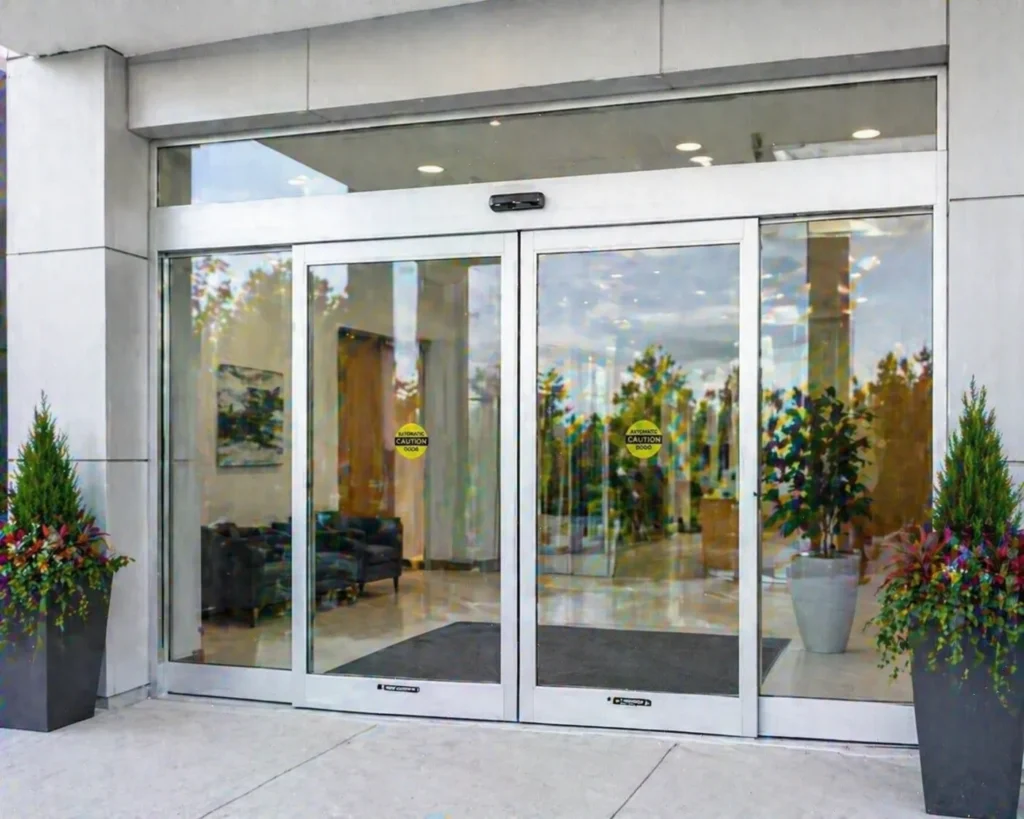
| Sliding Sensor Door | Retail storefronts, supermarkets, hospitals | Handles high foot traffic; eliminates swing-path collisions | Requires side track clearance and sturdy header mounting space. |
| Folding / Telescoping | Narrow corridors, limited vestibules | Maximizes clear opening width in tight spaces | Multiple moving panels require regular track alignment checks. |
| Touchless Actuators | Hygiene-sensitive facilities | Wave-to-open technology eliminates physical touchpoints | Sensor placement must be calibrated to prevent false triggers from passers-by. |

Activation Sensors vs. Safety Sensors
A common error during door specification is confusing activation controls with safety systems:
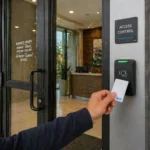
- Activation Devices: Signal the door operator to initiate the opening cycle. Common examples include push-to-open wall plates, touchless wave sensors, overhead motion sensors, and integrated card readers.
- Safety Devices: Continuously monitor the doorway and swing path to detect presence. Infrared safety beams and presence sensors prevent the door from swinging or sliding shut while an individual is standing in the doorway.
The Builders Hardware Manufacturers Association (BHMA) publishes ANSI/BHMA standards for power-operated pedestrian doors, covering areas such as opening speeds, force limits and sensor coverage zones. These are U.S. standards, so confirm with your supplier and local authority which ones apply to your project.
Site Assessment: Evaluating Existing Doors & Frames
Before ordering an automatic door operator, inspect the existing entrance hardware:
- Header Strength: Surface-mounted swing operators attach directly to the top frame header, which must support continuous rotational torque.
- Hinge & Pivot Condition: Sagging hinges or worn pivots force the motor to work harder, leading to premature operator failure.
- Glass & Frame Type: All-glass panels or narrow-stile aluminum frames require specialized mounting brackets.
- Integrated Access Control: If the door utilizes electric strikes or magnetic locks, the automatic operator must interface with access controllers to ensure latches release before the motor engages. View our specialized commercial access control supply and installation services to coordinate locking integration.
Code Compliance and Maintenance Standards
Accessibility Standards
In Ontario, power door operators are addressed in the barrier-free design requirements of the Ontario Building Code accessibility guidelines, which apply to new construction and extensive renovations. Details such as door widths and actuator placement vary by building, so confirm requirements with your local building department. For a deeper look, see our guide to accessible door requirements in Ontario.
Safety Inspection Requirements
Facility managers should perform routine daily safety checks. Following guidelines published by the American Association of Automatic Door Manufacturers (AAADM), staff should walk through the sensor activation zones daily and verify that presence-sensing safety beams stop the door instantly when occupied.
For ongoing preventative service, explore our dedicated commercial automatic door supply and installation page. For general entry adjustments, you can also check out our general commercial door repair options.
Frequently Asked Questions
Can my existing manual storefront door be converted to automatic?
In most cases, yes. A low-energy swing operator can be retrofitted onto existing commercial aluminum, hollow metal, or wooden doors, provided the overhead frame header and hinges are structurally sound.
What is the main difference between low-energy and full-power swing operators?
Low-energy operators open at reduced speeds with controlled force, typically activated by push-plates or wave sensors. Full-power operators open rapidly and require full overhead safety sensor coverage to protect people in the swing path.
Do automatic commercial doors work during power blackouts?
Most commercial operators feature a manual release that allows occupants to push or pull the door open manually during power outages. Battery backup systems can also be added to maintain automatic operation during blackouts.
Upgrade Your Commercial Entrances
Upgrading to automatic commercial doors requires expert site assessment, precise motor sizing, and strict compliance with local building codes. Mr. Door Repair provides site evaluation, operator supply, hardware integration, and ongoing maintenance across Toronto and the Greater Toronto Area (GTA).
- Call for Consultation: (647) 674-5367
- Hours: Sunday to Friday, 8:00 AM – 8:00 PM