A drafty entry door can quickly turn your entryway into an uncomfortable cold zone and inflate winter heating bills. Fortunately, most air leaks around exterior doors can be resolved in an afternoon once you pinpoint the exact source of the draft.
A replacement door sweep will not solve air leaking through a misaligned latch, and new weatherstripping cannot fix a gap caused by sagging hinges. This guide covers how to detect air leaks, choose the right repair, and recognize when professional frame or slab service is required.
Key Takeaways
- Test Before Buying Materials: Use simple light, paper, or smoke tests to locate exact leak points along the perimeter, threshold, or trim.
- Address the Right Component: Side and top gaps require weatherstripping; bottom leaks call for sweep or threshold adjustments; trim drafts need interior caulking or low-expansion foam.
- Hinge Alignment Prevents Gaps: Loose hinge screws allow doors to sag, pulling the top corner away from the frame seals.
- Frost Indicates Air & Humidity Issues: Indoor frost forms when humid interior air contacts surfaces chilled by external air leaks.
- Structural Damage Requires Professional Service: Warped door slabs, rotted door frames, or blown glass seals require professional repair or replacement.
How to Locate Entry Door Air Leaks
Perform these simple tests on a cold, windy day to identify every draft source. Mark problem spots with painter’s tape:
- The Flashlight Test: Have someone stand outside at night and shine a bright flashlight around the door perimeter while you observe from a darkened hallway. Any visible light pinpoints a gap.
- The Paper Test: Close the door on a slip of paper at various points along the frame. If the paper slides out easily without friction, the weatherstripping is not compressing properly. Virginia Tech’s home energy guide describes both this test and the flashlight test.
- The Smoke / Incense Test: Pass a lit incense stick slowly along the perimeter and trim joints. Smoke that flutters or is pulled toward a gap marks an active draft path, a method Natural Resources Canada describes for finding air leaks.
- The Damp Hand Test: Pass a slightly damp hand along the bottom edges and corners to feel subtle airflow.

Troubleshooting Guide: Symptoms & Recommended Fixes
| Symptom | Likely Cause | Recommended Fix | DIY or Professional? |
|---|---|---|---|
| Cold air along the latch edge | Sagging door or recessed strike plate | Tighten hinge screws; adjust strike plate position | DIY |
| Drafts along top and sides | Worn or flattened weatherstripping | Replace perimeter kerf or compression seals | DIY |
| Air or water leaking at the bottom | Worn door sweep or low threshold cap | Install new sweep; adjust threshold height screws | DIY |
| Air leaking from behind interior trim | Gap between door frame and rough opening | Remove casing; seal with low-expansion spray foam | DIY / Professional |
| Uneven gap width along one side | Warped door slab or twisted jamb | Inspect frame squareness; adjust or replace slab | Professional |
| Fogging between double-pane glass | Failed glass unit seal | Replace double-pane glass insert | Professional |
| Frost forming on interior hardware | Air leaks combined with high indoor humidity | Seal drafts; lower indoor relative humidity | DIY / Professional |
Step-by-Step Fixes for Drafty Front Doors
1. Replacing Perimeter Weatherstripping
Worn or compressed foam strips allow cold air to bypass the door slab:
- Pull the old weatherstripping out of the frame jamb channel (kerf).
- Measure the head and side channels individually.
- Press new high-resilience foam or V-strip weatherstripping firmly into the channel without stretching it (stretched material shrinks back, creating corner gaps).
2. Adjusting the Threshold and Door Sweep
Drafts under the door are usually caused by worn bottom sweeps or improperly set thresholds:
- Adjustable Thresholds: Locate the adjustment screws along the aluminum threshold and turn them in small increments (check the manufacturer’s instructions for direction) until a paper slip drags slightly under the closed door.
- Door Sweeps: Install a new flexible vinyl or brush sweep along the bottom edge of the door slab so it contacts the threshold cap evenly without binding.
3. Re-Aligning Sagging Hinges
If your door sags, the top latch corner pulls away from the weatherstripping:
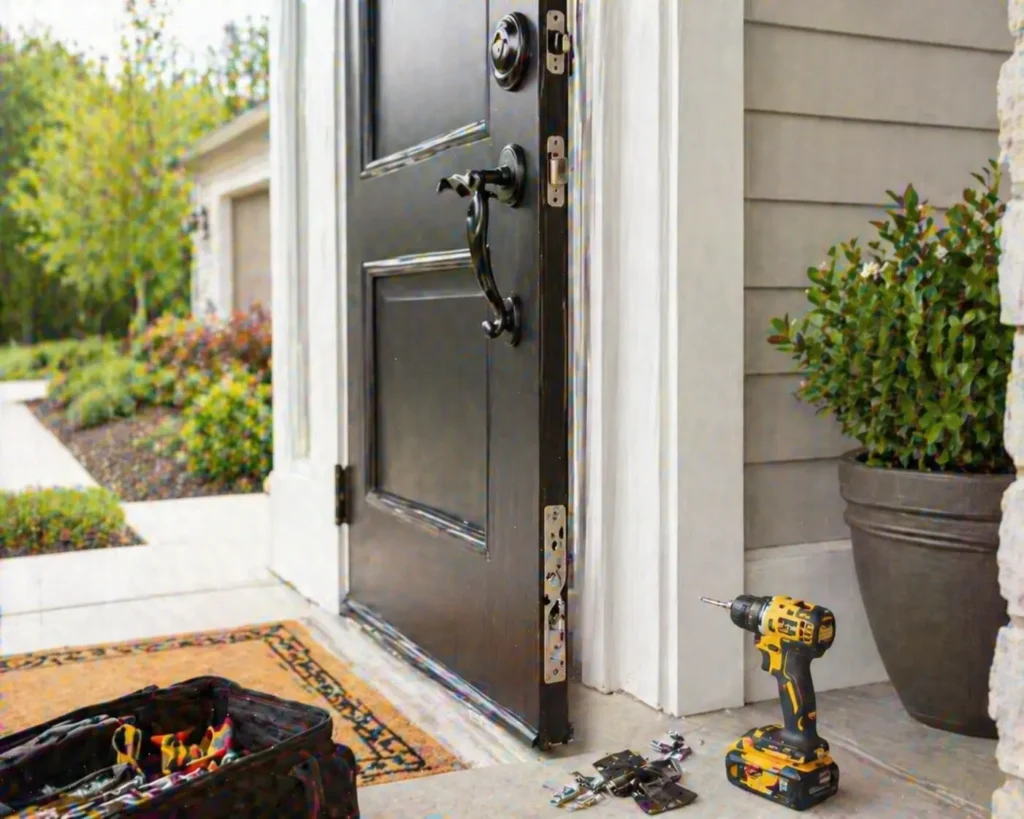
- Tighten all hinge screws.
- If screws spin freely (stripped holes), replace one short screw per hinge with a 3-inch wood screw driven deep into the structural wall framing behind the jamb.
4. Sealing the Frame-to-Wall Joint
Air leaking around interior casing trim indicates gaps between the door jamb and wall framing:
- Carefully pry off interior trim molding.
- Fill gaps using low-expansion window and door spray foam (standard high-expansion foam can bow jambs out of alignment).
- Reattach trim and seal outer seams with flexible caulking.
For structural jamb repairs, explore our door frame repair service.
When to Call a Professional
If drafts persist after replacing weatherstripping and adjusting hinges, the issue may involve structural frame movement or slab warping.
Attempting to force a warped door closed puts excessive strain on latches and hinges, leading to hardware failure.
You can learn more about complete door assessment and replacement by visiting our residential entry door repair and installation page. Not sure the door is worth saving? Our guide to repairing or replacing a front door walks through the decision.
For general frame adjustments, check out our general residential door repair services.
Frequently Asked Questions
What is the fastest way to test for drafts around an entry door?
The paper test is the fastest method. Close the door on a strip of paper at several points along the perimeter. If it pulls out easily without drag, the seal is insufficient.
Can a drafty front door be fixed without replacing the entire unit?
Yes. Most entry door drafts are resolved by replacing weatherstripping, adjusting threshold height screws, installing a new bottom sweep, or tightening hinge fasteners.
Why does frost form on the inside of my front door during winter?
Frost occurs when moist indoor air contacts metal hardware or door surfaces chilled by external drafts. Sealing perimeter air leaks and maintaining indoor humidity between 30% and 50% helps prevent frost buildup.
Restore Comfort to Your Entryway
Don’t let a drafty front door drive up your winter heating costs. Mr. Door Repair offers expert door assessment, weatherproofing, frame alignment, and entry door installation across Toronto and the Greater Toronto Area (GTA).
- Call for Consultation: (647) 674-5367
- Hours: Sunday to Friday, 8:00 AM – 8:00 PM