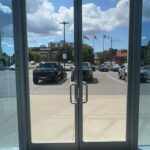
An automatic door that stops opening at 8:55 on a Monday morning is more than an annoyance. Customers cannot get in, staff scramble to prop doors open, and a door that behaves unpredictably can also be a safety risk. For Vaughan retailers, clinics and office managers, knowing what is normal, what is a quick check and what needs a technician saves time and avoids bigger repairs.
This guide walks through the most common automatic door operator problems, the likely causes and the safe checks a staff member can make. It also explains when to take the door out of service and call a professional.
Start With a Daily Walk-Through
The American Association of Automatic Door Manufacturers publishes a simple daily safety check for automatic doors . In short, walk toward the opening from different angles and confirm the door opens as you approach, moves smoothly and stops without touching you. Then step away and confirm it closes after a short delay. For swing doors, stand in the safety zone and confirm the door does not open. If a holding beam or other safety sensor is fitted, test that it keeps the door open while you are in the opening.
A two-minute check at opening time catches many problems before customers do. If any step fails, do not keep using the door in automatic mode.
Common Symptoms and Likely Causes
The door will not open
Check for a power switch turned off, a mode selector set to lock or hold closed, or a sensor lens covered by dirt, frost, signage or stock. Mats that have shifted or curled can also interfere with mat-activated systems. If the door still does not respond, the cause may be a controller, wiring or motor fault that needs a technician.
The door opens by itself or stays open
Ghost openings often come from sensors picking up movement they should ignore: reflections, hanging signs, moving displays, heavy rain or blowing snow. A door that stays open can also be held by an obstruction, a faulty sensor or settings that have drifted. Removing items from the sensor area is a reasonable first step; adjusting sensitivity is not.
The door closes too fast or too hard
Closing speed, force and hold-open time are safety settings, not preferences. If a door seems faster or harder than before, stop using it in automatic mode and arrange an inspection.
The door is noisy, sticks or drags
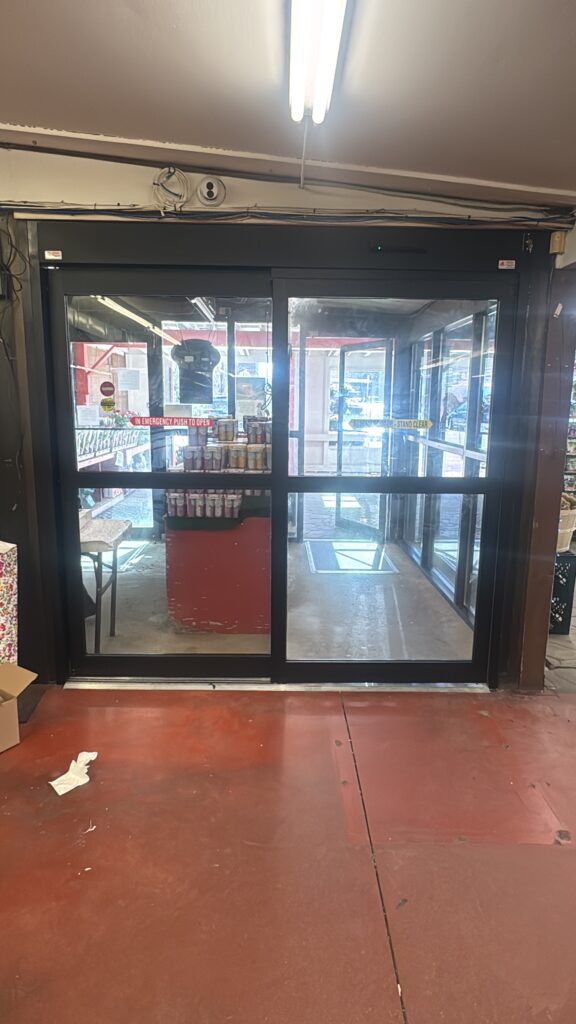
Grinding, scraping or squealing usually points to debris in the track, worn rollers, loose hardware or a misaligned panel. Vacuuming loose grit from the track is safe. Forcing a sliding door along its track is not.
The door fails in cold weather
Freezing temperatures, salt and slush are tough on tracks, sensors and batteries across the GTA. Ice build-up in the track and snow on sensors are common winter culprits. Keep entrance areas clear and have operators checked before winter rather than after the first cold snap.
What Staff Should Never Do
Automatic operators contain motors, controllers and live wiring. Do not open operator housings, adjust sensor angles, bypass safety devices or disconnect wiring. Do not tape over sensors or prop a door open with a mechanism still engaged. These shortcuts can turn a nuisance into an injury.
For a business in Vaughan, our door repair service in Vaughan page explains how we serve the area and how to reach us.
When to Take the Door Out of Service
Switch the door to manual operation, post a notice and call for service if:
- The door closes on a person or object it should detect
- A swing door swings toward you without stopping
- The door opens or closes unpredictably
- You see damaged glass, hanging panels or exposed wiring
- You smell burning or hear a motor straining
Accessibility Matters Too
Automatic operators often serve as the accessible entrance. The Ontario Building Code accessibility requirements list power door operators among the barrier-free features, and they apply to most new construction and extensive renovations. If your door is the main accessible route, a failed operator can shut out customers and staff who rely on it. Treat repairs as urgent and confirm requirements with your local building department.
Repair, Service Plan or Upgrade?
Repair costs depend on the type of door (sliding, swing or folding), the operator model, parts availability, glass or frame damage and whether the problem is simple, such as a replacement sensor. A door that keeps failing despite repeated repairs may be due for an upgrade. Our guide to upgrading to automatic commercial doors covers operator types, sensors and planning.
For troubleshooting, repairs and replacements, see our automatic door operator repair and installation service.
Keep a Simple Service Log
Write down each fault, the date, the weather and what changed afterward. Patterns such as sensor trouble on freezing mornings or slow closing after a delivery day help a technician diagnose the cause faster. A log also helps you decide whether occasional repairs are enough or whether a service plan or upgrade makes more sense.
It also helps to know who on your team is responsible for the opening walk-through, so the daily check does not depend on whoever happens to arrive first.
Key Takeaways
- Run a daily walk-through so problems are found before customers find them.
- Dirty sensors, obstructions and debris cause many faults and are safe to clear.
- Never adjust sensors, wiring or controllers unless you are trained to do so.
- A door that closes on people or will not stop must come out of automatic mode right away.
- Cold weather and salt make seasonal servicing worthwhile in Ontario.
Frequently Asked Questions
Why is my automatic door not opening?
Start with the simple causes: a switch or mode selector in the wrong position, a blocked or dirty sensor, or an obstruction in the path. If those checks do not help, the controller, motor or wiring may need a technician.
Why does my automatic door open by itself?
The sensor may be reacting to nearby movement, reflections, signage, rain or snow. Clear the area around the sensor. If the door keeps opening on its own, have the sensor settings checked.
Can I fix an automatic sliding door myself?
You can clean the track, wipe sensor lenses and clear obstructions. Anything involving the operator, wiring, sensors or door adjustment belongs with a trained technician for safety reasons.
How often should automatic doors be inspected?
Do a quick daily check, and have a technician service the door on a regular schedule that suits your traffic and building. Busy entrances and doors exposed to winter weather benefit from more frequent attention.
Do automatic doors work during a power outage?
Behaviour depends on the operator and whether it has a battery backup or a manual release. Ask your technician how your door should behave and test that it can still be opened manually.
Need Help With a Troubled Door?
If your automatic door is slow, noisy or unpredictable, get it looked at before it fails completely. Contact Mr. Door Repair at (647) 674-5367 or request a free estimate for troubleshooting, repair or a more reliable replacement.