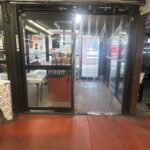
Glass doors give a business a welcoming, open look, but they also put a large, hard surface in the path of every customer, delivery, and cleaning cart. A door that is hard to see, a cracked edge that goes unnoticed, or a closer that slams can turn a routine day into an incident report.
For Brampton business owners and property managers, this guide covers practical commercial glass door safety tips: the glass itself, visibility, hardware, daily checks, and what to do when something breaks.
Start With the Glass
Safety glazing
Commercial entrance glass is normally safety glazing, either tempered or laminated, so it behaves more safely when it breaks. The City of Kitchener’s building bulletin notes that the Ontario Building Code requires safety glazing in doors, sidelights, and other areas, and that safety glazing must be permanently marked so inspectors can verify it. It is a municipal example, but the principle applies across Ontario: if a pane has no readable mark, ask your glazing contractor to confirm what it is.
Edge and corner damage
Tempered glass is strong across its face but sensitive at its edges and corners. A small chip that seems harmless can grow into a crack or cause the panel to fail. Treat any chip, shell, or crack at the edge as a repair item, not a cosmetic issue.
Make Glass Doors Easy to See
People walk into glass they cannot see, especially in bright light, in a crowded lobby, or while carrying packages. The Ontario Building Code article on transparent doors and panels requires a glass or transparent door to be designed so its existence and position are readily apparent, for example with visually contrasting hardware, bars, or other permanent fixtures. For doors on a barrier-free path of travel made of a single sheet of glass, it also calls for a continuous opaque strip of contrasting colour at least 50 mm wide, placed at a stated height range above the floor.
Whatever your building type, these habits help:
- Keep decals, strips, or bars in good condition and replace faded ones.
- Avoid placing displays or posters that hide the door edges.
- Keep entrance lighting bright and glare under control.
- Make sure push plates and handles stand out against the glass.
Keep the Hardware Working
Hinges, pivots, patch fittings, handles, and closers carry the weight of a heavy glass door. When they loosen, the door sags, drags, or swings unpredictably.
- Listen for new squeaks, scrapes, or clunks.
- Check that the door closes fully without slamming.
- Look for loose screws, shifted patch fittings, and worn pivots.
- Make sure locks and panic hardware still work as intended.
Closers need special attention. A door that closes too hard can strike people, and one that closes too slowly may not latch. Our guide to choosing glass for commercial entrances explains how glass type and hardware work together.
Build a Simple Inspection Routine
A five-minute walk-through at opening time catches most problems:
- Look at the edges and corners of every pane.
- Open and close each door, watching for rubbing or slamming.
- Check handles, push plates, and signage.
- Look for water, ice, or debris at the threshold.
- Confirm that accessibility operators, if installed, still respond.
Record what you find, even briefly. A dated note makes it easier to show that problems were noticed and handled.
Brampton Weather and Winter Hazards
Ice, slush, and de-icing products are a regular challenge at GTA entrances. Wet mats and thresholds raise slip risks, and salt can attack metal frames and hardware over time. Clear and dry the area at the door, replace worn mats, and check thresholds for damage. If you serve customers in Brampton, see how we support the area on our Brampton service area page .
What to Do When a Glass Door Breaks
- Keep people away: Block off the area and post a notice.
- Do not touch loose glass: Wear gloves and use a vacuum or broom only for small fragments after the area is secure.
- Take photos before cleanup: Document everything for insurance and incident records.
- Secure the opening: Ensure the building is not left open overnight.
- Call a glazing professional: Assess the door, frame, and hardware.
If a break-in caused the damage, contact the police before cleanup.
Make Safety a Habit for Your Team
The best inspection routine only works if everyone follows it. Make sure opening and closing staff know how to report a chipped pane, a loose handle, or a slamming closer, and that nobody props a door open with a wedge or stacks stock against the glass. Cleaning crews should use soft cloths and non-abrasive products, because scratches near the edges can weaken tempered glass over time. A short note in your daily log is enough to show that problems get attention.
When to Repair and When to Replace
A scratch or loose handle is a repair. A cracked pane, damaged edge, bent frame, or repeated hardware failure usually calls for replacement. Costs depend on glass type and thickness, door size, hardware, whether the frame can be reused, and how quickly the work must be done.
Mr. Door Repair repairs, supplies, and installs commercial glass doors across the GTA. See our commercial glass door repair and installation service for options.
Key Takeaways
- Use safety glazing that is permanently marked and ask for confirmation if it is not.
- Make glass doors easy to see with contrasting hardware, markings, and good lighting.
- Chips and cracks at the edge are safety issues, not cosmetic ones.
- Inspect doors and hardware routinely and keep a simple record.
- Take damaged doors out of service until they are repaired.
Frequently Asked Questions
Do commercial glass doors have to use safety glass?
The Ontario Building Code requires safety glazing in doors and related areas, with some exceptions and project-specific rules. Confirm the requirements for your building with your local building department or a qualified glazing contractor.
How can I tell if my glass door is tempered?
Look for a permanent mark in a corner of the glass, which identifies the glazing standard and supplier. If you cannot find a mark, ask a glazing professional to confirm the type.
Why did my glass door shatter without being hit?
Tempered glass can break from edge damage, scratches, installation stress, or, rarely, internal flaws. A technician can inspect the broken door and the frame to look for the cause and prevent a repeat.
How often should commercial glass doors be inspected?
Do a quick visual check daily and a more detailed inspection on a regular schedule that suits your traffic. Busy entrances and doors exposed to winter weather deserve extra attention.
What should I do if a glass door is cracked but still working?
Mark it, limit use if you can, and have it assessed promptly. A cracked pane can fail suddenly, and a door that is still working is not necessarily safe.
Need a Safety Check on Your Glass Doors?
If your entrance has chipped glass, loose hardware, or a closer that slams, get it checked before someone is hurt. Contact Mr. Door Repair at (647) 674-5367 or request a free estimate for commercial glass door repair or replacement in Brampton and across the GTA.