A stairwell door that will not close, a corridor door held open with a wedge, a rated door with a missing label: small details like these decide whether a fire stays in one part of a building or spreads. For Toronto property managers and business owners, fire rated steel doors are some of the most important passive fire protection in the building. They are also some of the most neglected.
Toronto and GTA buildings, from older mid-rise apartments to new industrial units, rely on rated doors to protect exits and separate spaces. This guide explains what a fire rating actually covers, where the real benefits come from, and how to keep a rated door doing its job.
What Makes a Door “Fire Rated”?
A fire rating describes how long a tested door assembly can hold back fire. Ratings are expressed in minutes or hours, and they apply to the complete assembly: the door, the frame, the hardware and any glazing. A permanent label on the door and frame shows it was built and tested as a rated product. Swapping a hinge, drilling a new hole or trimming the wrong edge can compromise the rating even if the door still looks fine.
Steel is a common choice because it does not burn and holds its shape well under heat. Many rated steel doors are hollow metal doors with a stiffened or insulated core. If you are weighing different constructions, our guide to how hollow metal and solid steel doors compare explains what each term really means.
Key Benefits of Fire Rated Steel Doors
Compartmentation that protects exit routes
Fire separations divide a building into sections so a fire in one area does not immediately reach corridors and stairwells. The Ontario Building Code requirements for doors in fire separations call for a self-closing device that returns the door to the closed position after each use. They only allow a hold-open device when it is designed to release the door on a fire alarm signal. The idea is simple: a closed door is a working door.
Durability in busy buildings
Steel frames and slabs handle carts, deliveries, cleaning equipment and constant traffic better than many alternatives. In service corridors, kitchens, schools and warehouses, that toughness means fewer dented edges, fewer loose hinges and a longer service life between replacements.
Added security
A steel slab set in a reinforced frame is harder to force than a lightweight door. That matters for back-of-house areas, electrical rooms, mechanical rooms and loading entrances. Hardware still has to let people leave quickly, so security and egress need to be planned together.
Clear responsibility for owners
The Ontario Fire Code applies to existing buildings , puts responsibility on the building owner unless otherwise specified, and is enforced by municipal fire departments. Keeping rated doors in good working order is one of the simplest ways to show that a building is being looked after.
What Keeps a Fire Rated Door Working
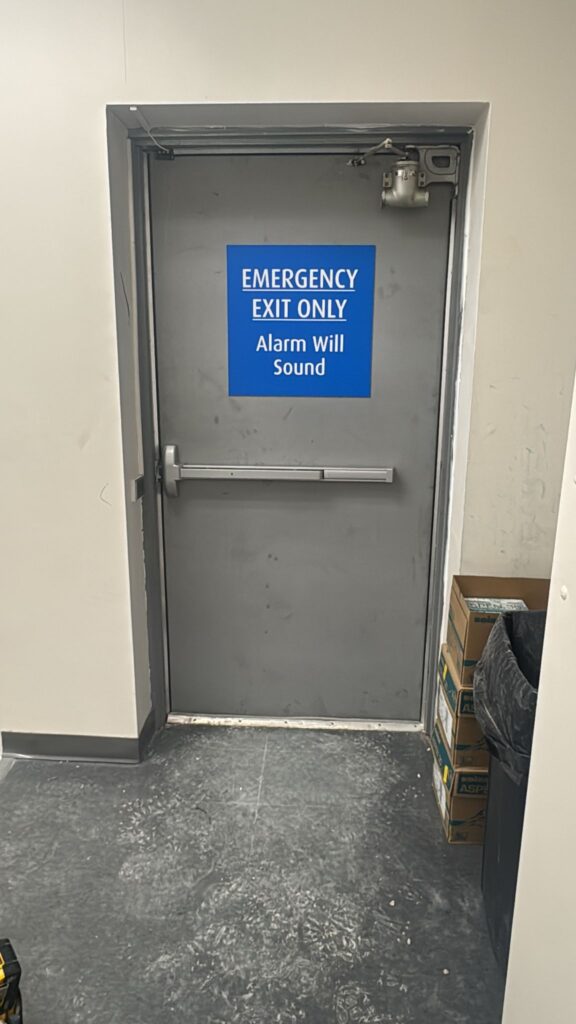
Most failures come from everyday habits, not from the door itself. Check that each rated door:
- Closes fully and latches on its own every time
- Is never wedged, blocked or propped open
- Still has a legible label on the door and frame
- Has even gaps around the edges and tight hinges
- Has intact glass, gaskets and seals where they are fitted
- Has not been cut, drilled or undercut without approval
Door closers deserve special attention. A weak or leaking closer can leave a door a few centimetres short of the latch, and that door will not do its job in a fire. Our door closer, panic bar and electric strike service covers the hardware that keeps rated doors closing and latching properly.
Signs a Fire Rated Steel Door Needs Attention
Watch for these during routine walkthroughs:
- The door drifts open or needs a push to latch
- Visible gaps at the top, sides or meeting edge
- Rust at the base of the frame or bottom of the door
- Bent or dented edges that rub the frame
- A label that is missing, painted over or unreadable
- Replacement hardware that does not match the original
Ontario winters are hard on steel at entrances. Road salt and meltwater tracked inside can speed up corrosion at the bottom of frames, so inspect the lower edge more often than the rest of the door.
Repair or Replace? Cost Factors to Expect
Costs vary with the required rating, door and frame size, glazing, hardware, wall construction and whether work happens in an occupied building. Repair is often possible for closers, hinges, latches and minor corrosion. Replacement is usually the safer route when the slab or frame is bent, rusted through or cannot be verified as rated.
Mr. Door Repair repairs, supplies and installs steel doors and frames across Toronto and the GTA. Our fire-rated steel door repair and installation page outlines the service. When you request a quote, ask for a written scope that states the rating you need so everyone is working from the same requirement.
Key Takeaways
- A fire rating applies to the full assembly, not just the steel slab.
- Self-closing and latching are what make the rating effective.
- Never wedge, block or modify a rated door without guidance from a qualified technician.
- Corrosion, weak closers and missing labels are the most common warning signs.
- Building owners carry the responsibility for keeping doors in working order.
Frequently Asked Questions
Do fire rated steel doors have to stay closed?
In a fire separation, the door is designed to be self-closing, so it should return to the closed position after each use. A hold-open device is only permitted when it releases the door on a fire alarm signal. Wedges, chairs and rubber stops defeat the purpose of the door.
Can I drill or cut a fire rated steel door to add hardware?
Not casually. Cutting, drilling or undercutting a rated door can void its rating. Check the label and manufacturer instructions and speak with a qualified technician or your local fire authority before adding locks, closers or viewers.
How can I tell if my steel door is fire rated?
Look for a permanent label on the edge of the door and on the frame. Building records and fire safety plans may also list rated doors. If the label is missing or painted over, have a qualified technician help confirm what you have.
Are fire rated steel doors only for commercial buildings?
They are most common in commercial, industrial, institutional and multi-unit residential buildings. Single-family homes follow different rules, so confirm requirements with your local building department.
How often should rated doors be inspected?
Check them regularly as part of routine building walkthroughs and keep records. The required schedule depends on your building type, fire safety plan and local fire department, so confirm it with your fire protection provider.
Get Your Fire Rated Doors Checked
If a rated door in your Toronto or GTA building drifts open, rubs the frame or has a label you cannot read, do not wait for an inspection to find it. Contact Mr. Door Repair at (647) 674-5367 or request a free estimate, and we will help you decide whether repair or replacement makes sense