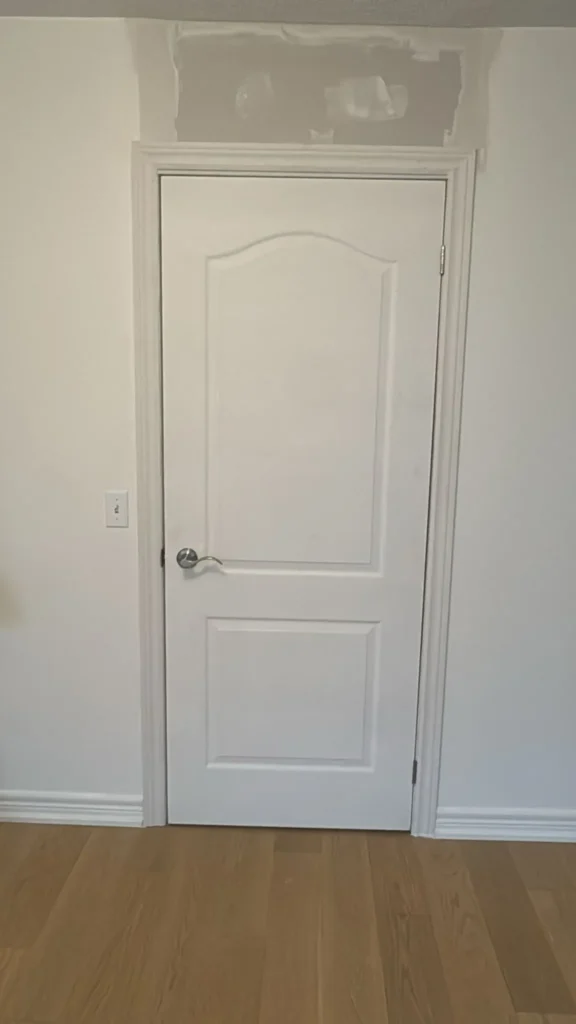
Interior doors are easy to overlook until one sticks, rattles, lets every sound through or simply looks wrong next to your new flooring. Yet a bedroom door, bathroom door or closet door gets used dozens of times a day, and the wrong choice shows up in how a room feels.
For Richmond Hill homeowners planning a renovation or replacing a worn door, this guide explains what to compare: construction, sound, style, size, hardware and fit, plus what to ask before you buy.
Start With the Room
Think about what the door has to do:
- Bedrooms and home offices: privacy and sound control matter most
- Bathrooms: moisture tolerance and a reliable privacy latch
- Laundry and utility rooms: durability and easy cleaning
- Hallways and living areas: appearance and smooth operation
- Closets: space-saving swing or sliding options
Choosing by room first narrows the field quickly and keeps you from paying for features you do not need.
Compare Door Construction
Hollow-core doors
These have a light interior, usually a cardboard honeycomb or similar filler, between two thin faces. They are the most economical choice and are easy to hang, but they transmit more sound and can feel flimsy.
Solid-core doors
A solid core is made of dense engineered material instead of a hollow centre. These doors are heavier, feel more substantial and reduce sound better. They can also need stronger hinges and a well-aligned frame because of the extra weight.
Solid wood and panel doors
Solid wood and traditional panel doors suit period homes and detailed trim, with a look that is hard to match. They respond to humidity, which is worth planning for in Ontario, where indoor conditions change from dry winters to humid summers.

Sound: What Actually Helps
Sound ratings are measured by Sound Transmission Class, which describes how well a door or wall assembly prevents sound from passing through. A technical guide on acoustical door design from the National Institutes of Health explains that a door assembly includes the frame, the leaf, perimeter seals, gasketing and door sweeps, which close the gap at the bottom. In other words, the slab is only part of the story: the gaps matter as much as the mass.
For a bedroom or office, a solid-core slab with a properly fitted frame, seals and a sweep will usually do more than any single upgrade. Our guide to soundproofing interior doors goes into what works and what does not.
Plan for Ontario Humidity
Wood moves. The USDA Forest Service’s Wood Handbook chapter notes that wood in service is virtually always changing moisture content slightly , and seasonal swings are what make doors swell, shrink or warp over time. In practice, that is why a door that closed perfectly in February can rub in August. Painting or sealing all six sides, including the top and bottom edges, helps limit moisture changes, and a small, even gap around the door gives it room to move.
Get the Fit Right
Many interior door problems are fit problems. Before ordering, check:
- Width, height and thickness of the existing slab
- Swing direction (left or right hand) and which way it opens into the room
- Frame condition: older GTA homes often have frames that have shifted
- Prehung or slab: a prehung door comes in its own frame and suits new openings or badly out-of-square frames; a slab replaces only the door and suits a sound existing frame
- Hinge and latch locations so the new door lines up with existing hardware
If the old door will not latch, the frame or hinges may be the issue, not the door. Fixing the frame first means the new door will hang and latch properly from day one.
Hardware and Finish
Choose hardware to match the room. Privacy sets suit bathrooms and bedrooms, passage sets suit hallways and closets, and dummy handles suit doors that only need to stay shut. Lever handles are easier to use than knobs for children, older adults and anyone with limited grip strength. Finish matters too: pre-primed doors can be painted to match trim, while pre-finished doors save time but are harder to match later.
What Affects Cost
Costs depend on the construction (hollow, solid-core or solid wood), size, style, whether the door is prehung or a slab, finish, hardware and the amount of frame adjustment needed. Installing a better slab in a poorly aligned frame will not deliver the result you want, so allow for frame work when quoting.
Mr. Door Repair supplies, repairs and installs interior doors across Toronto and the GTA. Our interior door repair, supply and installation service covers replacements, adjustments and hardware.
Local Note for Richmond Hill
Richmond Hill has a mix of newer builds and mature homes, and the two behave differently. New-build frames are generally straight and consistent, while older homes often have openings that have settled over decades. Measuring each opening individually, instead of assuming every door is the same size, saves returns. Learn more on our Richmond Hill service area page .
Key Takeaways
- Choose by room first, then compare construction, sound, style and fit.
- Solid-core doors usually block more sound than hollow-core doors, but gaps and seals matter too.
- Plan for seasonal moisture changes, especially with solid wood.
- Measure carefully and check the frame before ordering.
- Match hardware to the room and the people using it.
Frequently Asked Questions
What is the difference between hollow-core and solid-core interior doors?
Hollow-core doors have a light interior and are more economical. Solid-core doors use a denser centre, which makes them heavier, sturdier and better at reducing sound.
Are solid-core doors worth it for bedrooms?
They are a good choice where privacy matters, because added mass and a tighter fit reduce noise travelling between rooms. Seals and a door sweep help get the most out of the door.
Should I buy a prehung door or a slab?
A slab works when your existing frame is square and in good condition. A prehung door is usually better for new openings or frames that are damaged or out of alignment.
Why does my interior door stick in summer?
Humidity can make wood swell, closing up the gap around the door. If the door rubs only in certain seasons, planing or adjusting hinges may help, and sealing bare edges can limit future movement.
Can I paint interior doors to match my trim?
Yes, if the door is primed or paintable. Remove the door, seal all edges and apply paint in thin coats so it does not stick in the frame.
Ready to Update Your Doors?
If you are unsure which interior door suits your rooms, or whether your frames are ready for a replacement, we can help you plan it. Contact Mr. Door Repair at (647) 674-5367 or request a free estimate for interior door supply and installation in Richmond Hill and across the GTA.