A shower door that looked spotless in the showroom can look tired within a few months. Soap film, mineral spots and grime in the tracks build up quickly, and a cloudy door makes even a new bathroom look dated. The good news is that most of the work is about habits, not hard scrubbing.
For Oakville homeowners with glass shower doors, this guide covers a simple routine, product safety and the signs that a door needs repair instead of another round of cleaning.
Why Shower Doors Get Cloudy
Most of what looks like cloudy glass is a mix of soap scum, body oils and mineral deposits left behind when water dries on the surface. In areas with hard water, minerals leave white spots and a chalky film. Over time these deposits can bond to the glass and become harder to remove, so frequent light cleaning works better than occasional heavy cleaning.
Moisture trapped in tracks, seals and corners also invites mould and mildew. Good ventilation matters as much as the cleaner you choose.
A Simple Cleaning Routine
After every shower
Use a squeegee to pull water off the glass from top to bottom, then wipe the bottom edge and any horizontal ledges. Health Canada’s guide to moisture and mould recommends you squeegee and dry the walls around the bathtub and shower after use , and the same advice applies to glass. The guide also advises using the exhaust fan when you shower or bathe, and keeping it running for at least 30 minutes afterward.
Once a week
Spray a non-abrasive bathroom or glass cleaner, let it sit for a minute, and wipe with a soft microfibre cloth. Rinse well so no residue is left to attract more soap scum. Dry the glass to prevent new water spots.
Once a month
Clean the tracks and door bottom. Remove loose debris, use a soft brush or old toothbrush to loosen grime in the track, then wipe clean and make sure the drainage holes are clear. Wipe the seals and gaskets, and check that hinges, handles and brackets are tight.
Choosing Safe Cleaning Products
Check the care instructions that came with your door first. Coated glass and some metal finishes can be damaged by certain cleaners.
Health Canada is clear on one important point: never mix bleach with other cleaning products . Bleach reacts with any cleaner that contains ammonia or an acid, including vinegar, and the result can be toxic gas. That matters in a small, closed bathroom. Many glass cleaners contain ammonia, and vinegar is a popular homemade option, so keep products separate, read the labels and ventilate the room.
A few more rules help:
- Use soft cloths, sponges or microfibre, not steel wool or scouring pads
- Do not scrape glass with blades unless the manufacturer says it is safe
- Rinse cleaners off metal hardware so they do not pit or dull the finish
- Test any new product on a small, hidden area first
Frameless, Framed and Sliding Doors Need Slightly Different Care
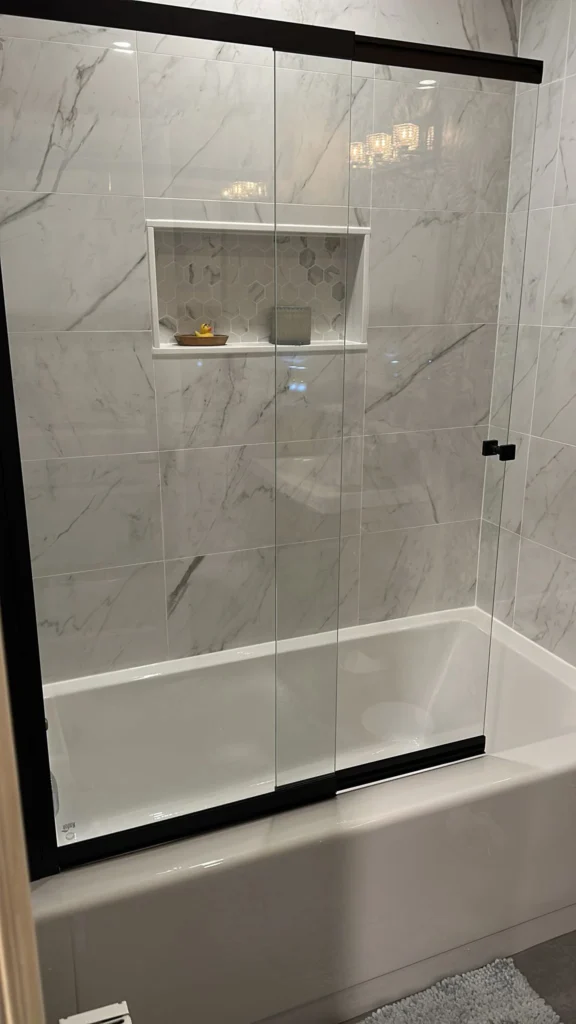
Frameless doors have few places for grime to hide, but their edges and hinges need regular wiping so mineral deposits do not build up. Framed and sliding doors have tracks, which collect water and soap residue, so they need more attention at the bottom. If you are not sure which style you have, check whether the glass sits in metal channels (framed) or is held by small hinges and clamps (frameless). Oakville homes include both styles, and our Oakville service area page explains how we serve local homeowners.
Common Cleaning Mistakes to Avoid
A few habits make glass harder to keep clean, not easier:
- Letting soap scum and water dry for weeks before cleaning
- Using abrasive pads, steel wool or hard scrapers on glass and metal finishes
- Leaving cleaner to dry on the glass instead of rinsing and wiping
- Ignoring the tracks until water no longer drains
- Using several products at once without checking the labels
Some glass is sold with a protective coating, and some homeowners apply water-repellent treatments. These can reduce spotting, but they still need regular cleaning, and the manufacturer’s instructions should come first.
Warning Signs While You Clean
Cleaning is a good time to look closely at the door. Contact a professional if you notice:
- Chips or cracks along the edges or corners of the glass
- A door that drags, wobbles or no longer closes flush
- Seals that are torn, loose or stained with mould that returns after cleaning
- Hinges or handles that are loose or corroded
- Water leaking outside the enclosure
Chips on tempered glass are especially important because they can weaken the panel. Our tempered glass shower door safety facts explain why.
When Repair Is Better Than Cleaning
If a door still looks cloudy after careful cleaning, the glass may be etched by minerals, which cleaning will not reverse. If the door has damaged seals or worn hardware, new parts may be cheaper than a full replacement. Costs depend on the type of door, size, glass thickness, hardware finish and whether parts are available.
Mr. Door Repair repairs, supplies and installs shower doors across the GTA. Our shower door repair and installation service covers hinges, seals, handles and replacement doors.
Key Takeaways
- A quick squeegee after every shower prevents most buildup.
- Use non-abrasive products and soft cloths, and follow the manufacturer’s care instructions.
- Never mix bleach with vinegar, ammonia or other cleaners.
- Clean tracks, seals and hinges monthly and keep the bathroom ventilated.
- Chips, loose hardware and failing seals need repair, not more scrubbing.
Frequently Asked Questions
What is the best way to clean a glass shower door?
Squeegee after each shower, wipe weekly with a non-abrasive cleaner and a soft cloth, and clean the tracks and seals monthly. Always check the manufacturer’s care guide first.
How do I remove hard water spots from a shower door?
Use a cleaner suited to glass and soft cloths, and repeat gently instead of scrubbing hard. Ask the manufacturer before using acidic products on coated glass or metal finishes, and never combine them with bleach.
Is it safe to use vinegar on a shower door?
Many homeowners use it, but check your manufacturer’s instructions because some finishes can be damaged. Never mix vinegar with bleach or leave both products in a closed bathroom together.
How often should I clean my shower door?
Squeegee daily, give it a thorough wipe once a week and clean the tracks and seals once a month. Homes with hard water or heavy use may need more frequent attention.
When should I call a professional about my shower door?
Call if the glass has chips or cracks, if the door drags or wobbles, or if seals and hinges are worn. These faults affect safety and water control, and cleaning will not solve them.
Keep Your Shower Door Looking and Working Its Best
If your door has worn seals, loose hardware or glass that no longer cleans up, a quick assessment can save you from a bigger problem. Contact Mr. Door Repair at (647) 674-5367 or request a free estimate for shower door repair or replacement in Oakville and across the GTA.